





 Animal Encounter
 Our Locations
 Family Fun
 Meet Ripley!

Search
Search results for ""
348 Results Found
Pages
Polar bears are the largest land carnivores on earth. They live in the Arctic and depend on sea ice for hunting, resting, and breeding. In recent years, the polar bear’s way of life has been increasingly challenged by the lack of sea ice and prey resources present in their natural habitat. Environmental changes are causing drastic impacts in the polar bear’s survival strategies. As a top predator, changes in their population and distribution drastically affect the state of the Arctic ecosystem. In 2008 the United States listed polar bears as a threatened species under the Endangered Species Act (ESA) of 1973. According to the ESA, a threatened species is, “likely to become an endangered species within the foreseeable future throughout all or a significant portion of its range.” Currently, 19 populations of polar bears exist in the Arctic with an estimated total of 20,000-25,000 polar bears world-wide (Polar Bear International). These populations are challenged daily by a lack of sea ice, food and resources. Sea Ice Eco-Regions Help Scientists Better Understand Polar Bear Populations Dr. Steven C. Amstrup, a scientist from Polar Bear International, has split these populations into 4 sea ice eco-regions to study the environmental challenges and impacts to polar bears. These eco-regions are determined by the way the ice forms and changes within each region, and the affects this causes on the polar bears that live there. These regions help scientists to understand all polar bear populations by extrapolating data on how they are surviving based on the health and condition of other populations in the same region. Some of these ice regions will melt more quickly than the others and the bears living in those regions are faced with the most immediate challenges for survival. Polar bears depend on the ice for access to their prey. Sea ice reaches its maximum extent in March and minimum extent in September. When the ice is thick, polar bears travel in search of breathing holes in the ice to hunt ringed seals and the occasional beluga whale. These prey sources are very high in blubber content which will help sustain the bears throughout the year. According to the Alaska Science Center, as the summer sea ice melt period has lengthened in the past 25 years, there has been a decline of over half a million square miles of summer sea ice cover. Most polar bears follow the ice as it retreats to stay with their food source, sometimes traveling hundreds of miles to stay alive. Other bears strand on land in the summer months where food is difficult to find. In recent years, polar bears have been challenged by the reduction in sea ice and the increased distance between ice floes. According to scientist Walt Meier of the National Snow and Ice Data Center, “The long-term trend is becoming more and more clear: sea ice has declined by 12 percent per decade since 1979, and the last five years have still been the five lowest in the satellite record.” This forces polar bears to swim further distances each year in search of ice. Polar bears in the seasonal ice areas are the most endangered with longer and longer ice-free seasons testing the limits of their fat reserves and physical endurance. Polar Bear Conservation and Awareness Polar bears have become a key ambassador for conservation education and climate change awareness. The challenges these animals face help teach about environmental issues impacting the world. The most significant challenge affecting polar bear survival is the lack of sea ice. While there are multiple causes for this increase in ice melt, scientists have come to an agreement on the primary cause. Hundreds of climatologists participating in the Intergovernmental Panel on Climate Change have concluded with at least 90% certainty that warming in the Arctic is linked to human activities that cause a build up of green house gases. Some greenhouse gases occur naturally while others are solely emitted through human activities. The primary greenhouse gases that enter the atmosphere because of human activities are carbon dioxide, methane, nitrous oxide and fluorinated gases. The increase of greenhouse emission due to human activities is causing our climate to change more rapidly than it would naturally, creating environmental problems across the globe. Ready to Take Action? Though the changes to the environment may seem overwhelming, it’s important to remember that it is not too late to take action to help protect the environment and the animals that call our planet home. We can all make a difference by making small changes in our daily lives. These simple steps will soon become habits and ultimately influence your daily choices and inform your everyday decisions. • Avoid drive-through businesses; don't idle for more than 30 seconds. • Use no more water than needed. • Consume less meat. Eat three meatless meals per week. • Avoid products with excess packaging. • Support environmentally-friendly companies. • Encourage members of your social circles to adopt sustainable lifestyles—and lead by example. Interested in learning more about climate change, carbon footprint and ways to take action? Check out these resources for more information: Do you know your carbon footprint? Polar Bear International Climate Change and Green House Gases Arctic Home Sources EPA Climate Change Website: www.epa.gov/climatechange/index.html The National Snow and Ice Data Center:www.nsidc.org New England Aquarium: Climate Change Effects on Ocean Animals www.neaq.org/conservation_and_research/climate_change/effects_on_ocean_animals.php Polar Bear International: www.polarbearsinternational.org USGS Alaska Science Center: http://alaska.usgs.gov/science/biology/polar_bears/index.html
Pages
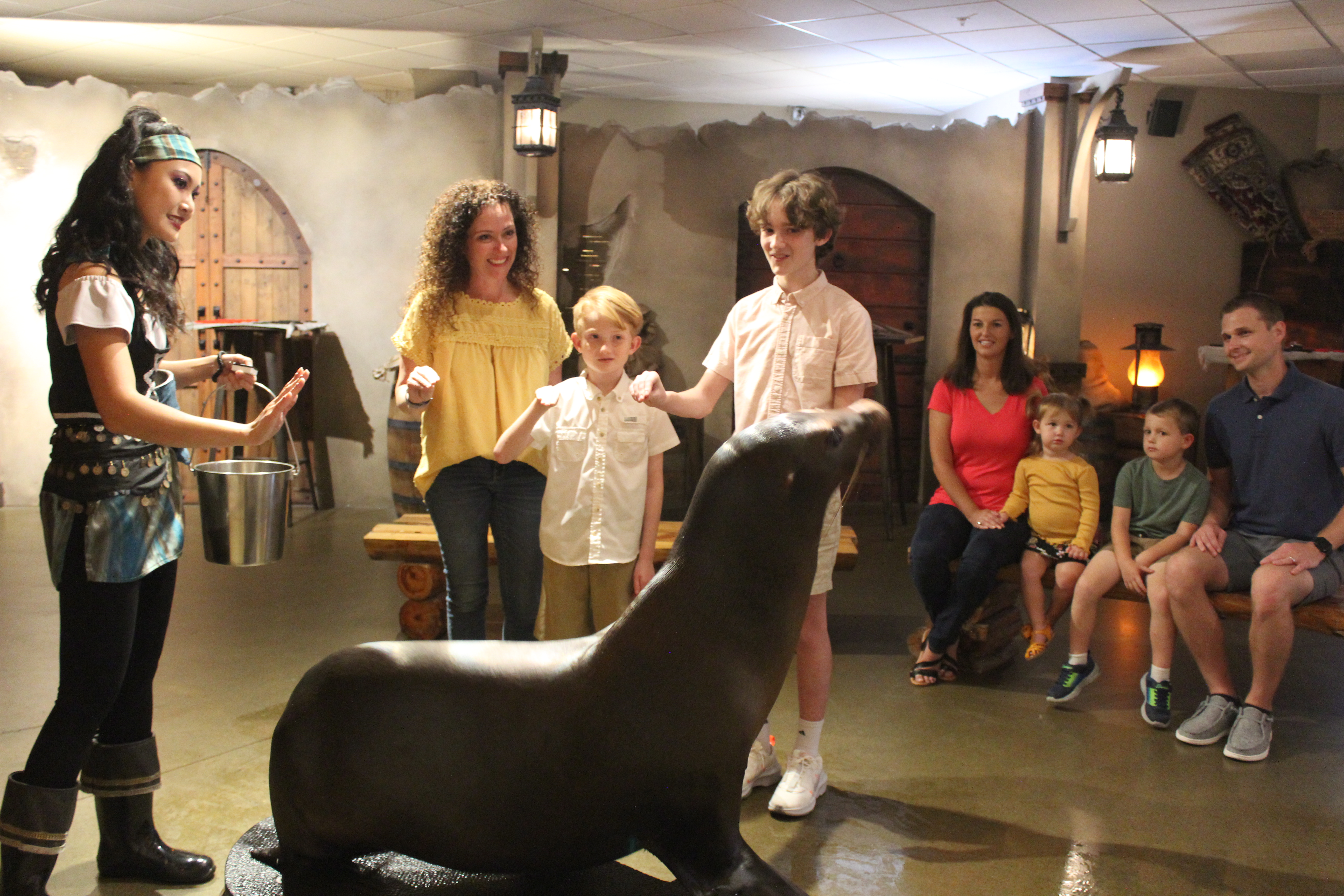
Ages: 5 years and older Program Price: $200 (includes 12 participants and 2 required chaperones) $12.50 per additional participant up to 25 participants total $10 observer fee (2 or younger are free) Program Size: 12 participants and 2 required chaperons Maximum of 25 participants and 4 required chaperons (additional fees apply) Program Time: 2:00 – 3:30 pm Availability: Sundays Year-Round Are you looking for that one-of-a-kind birthday party experience? Maybe you are searching for a unique location for an exciting group experience. Ocean Connections offers group programs perfect for scout troops, community groups, family outings, special occasions and birthday parties. All Private Parties can be tailored to fit age groups 5 years and older making them a truly unique experience. Come behind the scenes at Ocean Connections to learn about our seals and sea lions, their adaptations, and how to train our animals. Participants will have the chance to use hand and voice signals to communicate with our animals during a private training session. One participant may be selected as a special volunteer and has the opportunity to work personally with our animals. Following animal interaction, sit back, relax and enjoy our animals as they perform in a public or private marine mammal presentation. Private Parties include: 12 participants and 2 required chaperons Educational portion focused on the seals and sea lions cared for at Ocean Connections Private animal training session Animal interaction using hand and voice signals Special volunteer highlighted in a public or private presentation (weather dependent) Private Party Fees and Guidelines Package for 12 participants and 2 adult chaperons--$200 Each additional participant is $12.50 up to a total of 25 participants. Participants must be at least 5 years old to interact with our animals. Large parties (15 + participants) require 4 adult chaperons. Required adult chaperons are included in the price of the program. Chaperons may not have young children (2 or younger) under their care during the party. If infants and toddlers are attending, the guardian will be considered an observer and is subject to a $10 observer fee. Additional observers may be added to the program for a $10 per person observer fee. Children 2 or younger are free. As an observer, you may take still photography from designated areas, must follow all trainer rules and guidelines and may not videotape any portion of the program. Observers should remain seated in designated areas and should never disrupt the program through movement or noise level. Zoo admission and parking are NOT included in the cost of this program. We encourage you to enjoy the zoo the date of your party. Please plan accordingly so that you check-in at the Sea Lion Shoppe 20-30 minutes early ensuring your party starts promptly at 2:00pm. Due to weather and Milwaukee County Zoo schedules, some Private Parties will receive a public presentation while others will receive a private presentation. All Private Parties are held rain or shine. Please see our Weather Policy for details. Party Planning Tips Collect parent signatures for all participants prior to zoo arrival on the date of your program. Designate a meeting area for participants and families. We suggest the Milwaukee County Zoo Walk-In Gate located on Bluemound Road. Parents can drop their children off and pick up at this gate easily if they are not attending the party. Walk-in admission fees can be paid at the Walk-In Gate and will not be subject to parking fees. Parents attending the program can enter the zoo, park and meet at this same entrance within the parking lot. Coordinate with participants’ families who have zoo memberships to help reduce the cost of admission and zoo parking fees. Consider purchasing a Milwaukee County Zoo family membership. There are many membership levels that include multiple guests, parking and offer free admission to the zoo for an entire year. Contact Group Sales for information regarding group admission rates. Ocean Connections does not offer an area for cake and presents. There are many public picnic areas located around the zoo that could be utilized for this purpose. Due to the uniqueness of this program, phone reservations are required. For details or to book a party, please feel free to contact us at 414-453-5527 ext 1 or reservations@oceanconnections.org.
News Item
One year ago I sat in a conference meeting room and listened intently as Rita Vondra of the Chicago Zoological Society presented on a research project currently underway and needing assisted funding in Punta San Juan. The project centered around the need to evaluate endangered fur seals and sea lions which reside in an remote preserve located in Punta San Juan. The health of this Peruvian population is essentially unknown. Biologists are attempting to study the population in an effort to identify and evaluate current threats affecting the populations. Located approximately 250 miles south of Lima, near San Juan de Marcona, the Punta San Juan Marine Protected Area supports key populations of many endangered and threatened species. This reserve is home to nearly half of the endangered Humboldt penguins in Peru. It contains several hundred thousand sea birds as a key nesting area. The reserve also has key rookeries for the South American sea lion and Peruvian fur seal, both of which have seen severe declines in Peruvian population sizes. Biologists goals focus on the ability to evaluate the population health of the wildlife and to develop cohesive conservation strategies. Through assessments we hope to determine indicators as to disease and toxicant exposure, reproductive success, population stability, population genetics and overall population resilience to external threats. Information gathering is crucial. The more information we are able to learn from these animals, the greater our chances are of protecting these species. As I listened to the presentation a year ago, I felt compelled to become involved in research that could truly make a difference in protecting wild populations of seals and sea lions that are currently endangered. These animals live in a remote part of the world, in what should be a healthy sustainable environment. Yet scientists have seen dramatic declines in population numbers with questions revolving around over fishing, environmental contamination, toxicant exposure and the health of our oceans. At Oceans of Fun we have dedicated our lives to marine mammal care and conservation through public education. Our animals are ambassadors for those in the wild, teaching our guests about marine mammals, their environment and conservation needs. Although we wish that our oceans provided a healthy environment for wildlife, we are keenly aware of the threats which numerous species now face due to mans destruction and lack of protection. And so the opportunity to make in difference knocked upon our door. After months of preparation the time has finally arrived. Today is packing day. Packing for this trip is a bit complicated and involves not only clothing but also food, sleeping bags, wet suits and daily necessities. Regardless of the size of the suitcase, this is a challenge! Tomorrow the plane heads south. First to Atlanta Georgia where I will meet up with my colleagues from the Chicago Zoological Society and St. Louis Zoo , then off to Lima. Even with all my research and reading, the unknown of this region is upon me and certain to be exciting and full of surprises!
News Item
I am writing this final entry on my way back to the United States. With the magnificent sights and sounds of Punta San Juan still fresh in my mind, I continue to be inspired by the team of people that came together over these past 12 days and thankful for their dedication and commitment to this project. Our trip was extremely successful with over 100 animal health assessments being conducted! With each animal being tagged we are hopeful that the students and staff at Punta San Juan will continue to bring in updates and data from these populations. As you can see from the photos, the environment in Punta San Juan is breath taking. Waking up to the sounds of pups calling mothers, waves crashing upon the shore and seabirds taking flight was simply amazing! Even in an area so remote from the rest of the world, it was disappointing to see animals suffering from pollution, toxins and entanglement. Our resources are limited and need to be appreciated and protected. Our goal is not to walk in for a week but to make a difference through teaching about these animals, our world and inspire changes in human behavior that will truly make a difference in saving our oceans. Oceans of Fun has committed to this project for the next 3-5 years and we hope that all of you will do your part as well! For tips on how you can make a difference both globally and in your own back yard check out our Conservation Tab at www.oceansoffun.org Together we can all make a difference!
News Item
In 2012 Oceans of Fun joined in a collaboration with the Chicago Zoological Society, Saint Louis Zoo, Kansas City Zoo and the Punta San Juan Project of the Center for Environmental Sustainability at Cayetano Heredia University to collect baseline data assisting in evaluating the South American sea lion and Peruvian fur seal populations in Punta San Juan. Collecting baseline data provides us the opportunity to study disease, toxicant exposure, reproductive success, population stability, population genetics and overall population resilience to external threats the animals are facing in the wild today. Following El Nino in 1997/1998 the Peruvian fur seal population met a severe decline. Currently these population numbers within the protection of the National Reserve are rebounding providing researchers the ability to study the effects of environmental influences. As a top predator, seals and sea lions provide indicators as to environmental conditions and the overall health of our oceans. This year we are expanding our research project to study pup growth and development with the goal of correlating and comparing data obtained in both wild and captive animals. Life in the wild is increasingly challenging for many animals due to environmental changes and destruction, habitat encroachment, over fishing and pollution. Through data collection and analysis we are able to gain knowledge about animal needs, behavior, and survival. Punta San Juan in a marine protected area allowing for enhanced species and ecosystem protection. Being a key rookery for the South American sea lion and endangered Peruvian fur seal, this area offers the ability to study diverse populations of animals year round providing valuable information on species sustainability . Oceans of Fun is honored and excited to play a key role in the development of research projects which we hope will provide us information on pup development, behavior and survival both with wild and captive populations. This week will be filled with animals, data collection and valuable experiences. Preparation for this trip begins well in advance planning-wise. We are living in a field house with limited water and electricity. Temperatures are variable throughout the day and packing includes everything from shorts/tanks to coat/warm pants. Packing must include bedding, headlamps, hiking boots, sunscreen, candles, bug spray, etc, etc..... The journey is lengthy, starting with an 8 hour flight into Lima, Peru. Upon arrival, our team unites and field supplies are purchased. Part two of our travel then occurs as this year we took an elite overnight bus, Excluciva (Civa) from Lima to Marcona where we were then met and transferred to the Reserve. Arriving at 6 AM today, the travel was well worth the investment in time. Greeted by the calls of fur seal pups playing on the beach we couldn’t help but pause and smile at the natural beauty before us. Our bunkered looks over the N-0 and N-1 beaches, home to between 400-500 pinnipeds this year, including over 100 pups which are currently playing in tide pools along the shoreline. Today we get to enjoy the beauty of this land as we purchase our final supplies, prepare for the rest of our teams arrival, develop our plans and final parameters for data collection which will begin with animal observations. We are ready to go!
News Item
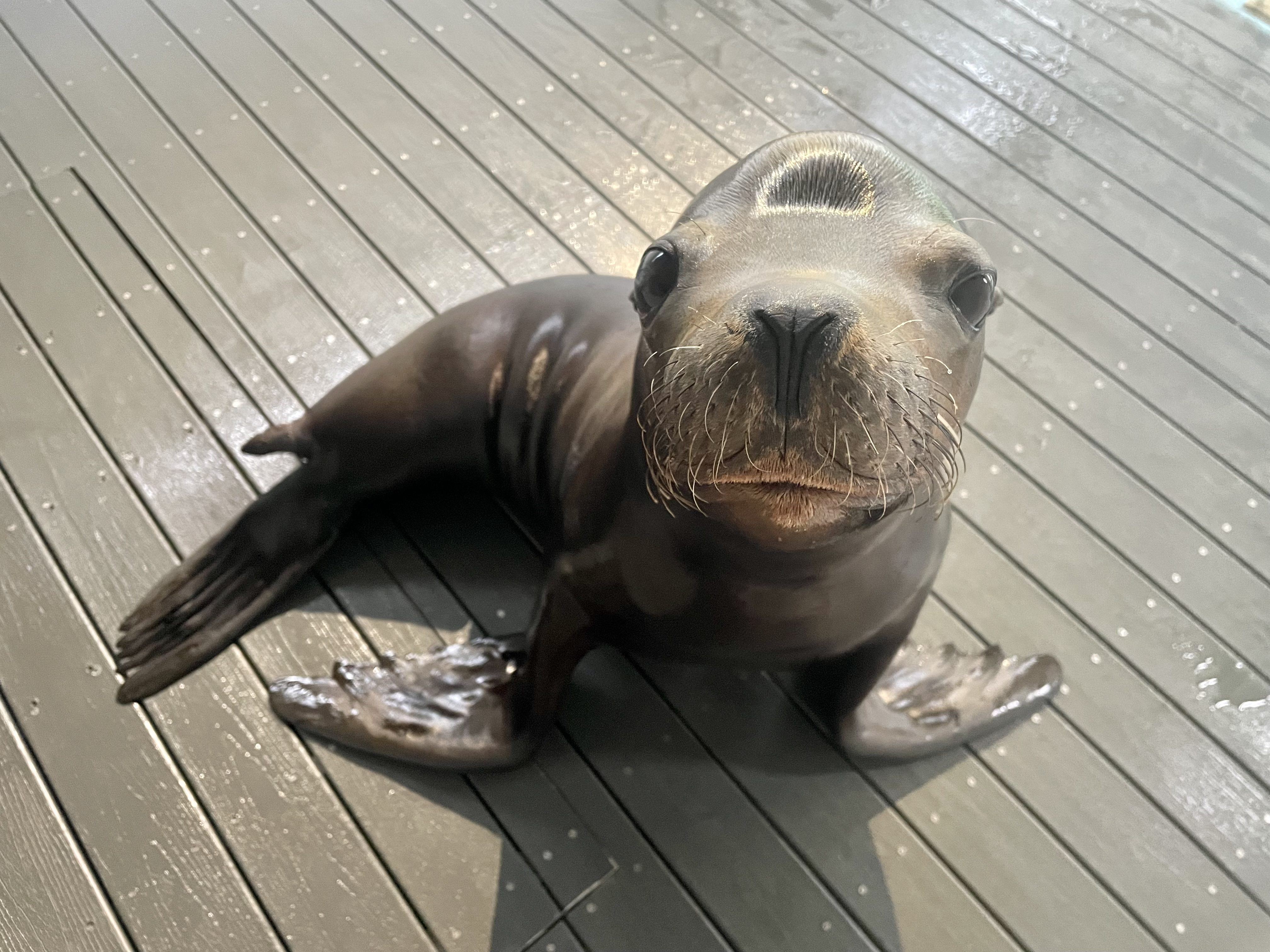
The trainers at Oceans of Fun have been busy working to wean our two youngest pups, Reese (8 months old) and Zeus (1 year old) from their mothers’ milk. Their mother’s milk provides them with all of the nutrients they need, as well as fat to ensure they stay warm throughout the winter months. Sea lion pups typically begin eating fish anywhere from 6-12 months of age. Early on, Reese and Zeus’ trainers have encouraged them to play with and explore fish. From tossing a capelin around in the air, to chasing live bait fish in a baby pool, the weaning process has been all fun and games for our youngsters! In no time, these pups are sure to begin eating fish all on their own! While still nursing from their mothers, Oceans of Fun trainers focused on introducing the pups to all different kinds of sights and sounds, including our educational shows, all kinds of visitors, and so much more – this is called informal training. Once Zeus and Reese are eating fish on a consistent basis, we can begin their formal training, which will include foundation behaviors that will be utilized as the basis for all future training! Be sure to stop by Oceans of Fun this coming season to visit and possibly get a glimpse of these fast growing pups!
Newsletters
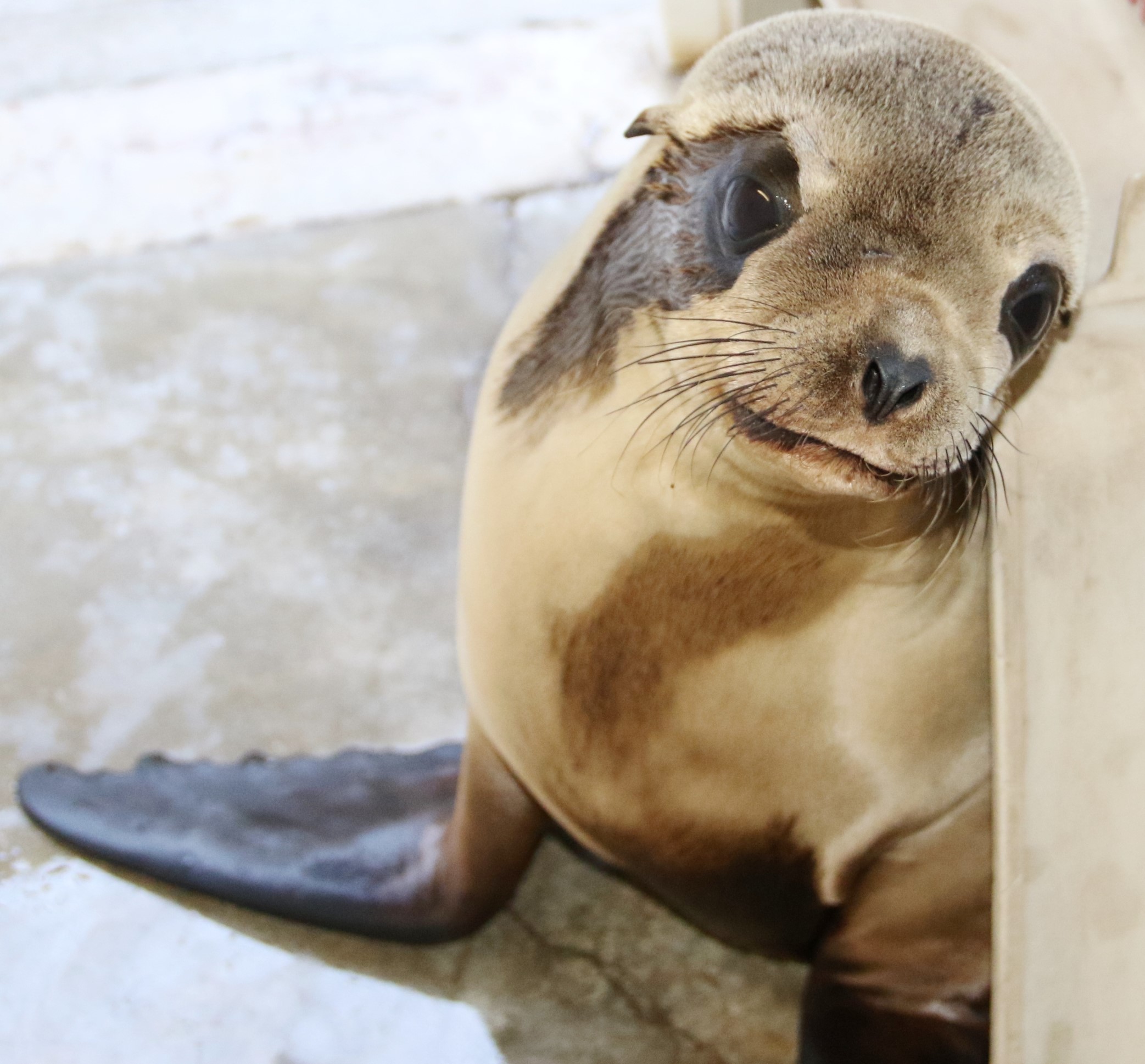
Our three California sea lion pups are doing phenomenal. The summer season was an exciting time for all three of them, as it was Colby’s first season performing in shows while Talise and Nalu were learning all about the sights and sounds that accompany the summer season. Currently, the pups are re-acclimating to the cold weather, by eating lots of yummy fish to build up a nice thick blubber layer for the winter months. When temperatures are not too cold, the pups love romping through the pool, especially with their big buddy Diego. These flippered friends have a ball chasing each other and engaging in games of tag at all hours of the day! This winter will be a training extravaganza for our three pups! They are in a stage of their development where their brains are like sponges, ready and eager to learn, learn, learn! For youngsters like Colby, Talise and Nalu, training foundations are established as they begin to understand how to learn. We expect each pup will learn at least 25 new behaviors this winter! Be sure to follow us on Facebook to get the latest updates on our quickly growing pups!
News Item
It goes without saying that our two sea lion pups have grown in leaps and bounds this summer! Talise, now 5 months old, always seems to find something new to investigate. Colby, who is now over 1 year old, is continuing to progress in his formal training! These two pups have become excellent playmates for each other, often romping through the pool chasing after one another. These play behaviors are very important for growing pups as it helps them to learn about social relationships, how to survive in their environment all while increasing their strength and coordination. Though still nursing from her mother, over the past month Talise has become extremely interested in playing with fish. She enjoys taking them from the trainers, swimming around with them and tossing them about. Talise will continue to nurse from her mother until she is about 6 to 12 months of age, but playing with fish is the first step in weaning a sea lion pup. This summer Colby was introduced to shows where he has become more comfortable being around the sights and sounds of the crowd, music and microphone. He is progressing very nicely in learning basic behaviors such as to lie down, which we call “sleep”, and to go in a circle. The newest behaviors Colby is working on mastering are to jump and to gate, or take turns. Gating or taking turns, is very important and something that all of our animals learn. By teaching them to take turns, it allows the trainers to dedicate individual attention on each animal through out the day, which is essential to providing them with the best training possible. Our staff is thrilled in the progress that these two pups are making and we can’t wait to see what their next milestones will be!
News Item
Mark your calendars for Sunday, June 7th, 2020! Join us for a fun day of golfing, prizes and giving as we host our 2nd Annual Putting Fore! Pinnipeds Charity Golf Outing at Ironwood Golf Course! Proceeds will benefit conservation efforts for various pinniped species including harbor seals and California sea lions! Your participation directly contributes to Ocean Connections education, conservation and animal care programs. Learn more or register today by clicking here. Unable to attend but looking to get involved? Make a donation! Any contribution automatically enters you in a drawing to win a backpack, a water bottle, and a four pack of show tickets good for the 2020 season!
Pages
Please fill in your order number and golfer information below so we can be ready for you when you arrive at the golf course. If you have purchased a full team, please fill in information for all 4 golfers, if you have purchased a single golfer spot, please just fill in the fields for the primary golfer.
News Item
Reese was born in July 2015 and followed the typical milestones for sea lion pups including weaning from her mother’s milk. It was quickly noticed that eating fish became increasingly difficult for Reese. While it was apparent she was hungry, she wanted nothing to do with fish. We let her continue to nurse until she reached a weight where we could safely do a health assessment to determine this aversion toward fish. When she finally reached the needed weight, we were able to do the procedure and discovered that Reese has Oropharyngeal Stenosis. This means her esophagus is oddly shaped and only one quarter the size of what it should be. If she were in the wild, she would have no chance of survival. Being dedicated to the health and welfare of each and every one of our animals, the animal care team at Oceans of Fun knew that giving up on Reese was not an option. Our staff has worked relentlessly to keep this tough little cookie up on her flippers and ensure she’s eating fish painlessly. We are proud to say that Reese is now eating 10-12 pounds of fish every day! Being one of the first zoological institutions to encounter this naturally occurring birth defect in a California sea lion, we are thankful that we were able to help Reese and ensure she is happy, healthy, and pain free. Read the full story here and enjoy video footage of our animal care team feeding Reese!
News Item
Just because we have to keep our distance, doesn’t mean we have to stay inside! Join Ocean Connections for our very own Sea Lion Shuffle Stay Away 5K, with all proceeds benefitting sea lion care and conservation. Run, walk, hike, or bike a 5K by yourself from anywhere to participate in this fun event! Register at https://www.oceanconnections.org/events, then run, walk, hike, or bike a 5K by yourself on July 18th or 19th! Your $30 registration fee benefits sea lions AND includes a Sea Lion Shuffle 5K commemorative t-shirt print with the winning design from our T-Shirt Design Contest! A special thanks to Mid-City Sports for sponsoring our t-shirts that each participant in our Sea Lion Shuffle - Stay Away 5K will receive! What's a Stay Away 5K? Watch this video from Ocean Connections president, Shelley Ballmann, showing you exactly how to do it: https://www.facebook.com/watch/?v=671819827008120 This is a remote 5K - you do not need to be local to participate! Run or walk wherever you live! THANK YOU FOR YOUR SUPPORT! Donations through this event will help us to make up for revenues that we would have otherwise generated from spring and summer educational programming and fundraisers that have been cancelled due to COVID-19. Gifts through this virtual race will support our care and conservation of sea lions.
News Item
Ocean Connections is devastated to share that our femal Atlantic harbor seal, Mango, has passed. When animals, like Mango, come from the wild it is not uncommon for them to have underlying health issues which do not surface for years. In April of 2021 after extensive efforts from our animal care and veterinary teams, x-rays of Mango’s chest showed she has cancerous masses. We dedicated our lives to ensuring that Mango received the best care, quality of life, and unwavering love throughout her journey. She, unfortunately, succumbed to the disease and lost her battle with cancer at the beginning of May. She will forever be remembered as an amazing ambassador, loving mom, and an international internet sensation. We are eternally grateful for the opportunity to have loved and be loved by Mango. If you would like to see the full tribute to this beautiful soul, click here.
News Item
Hippity Hoppity Easter's On Its Way! Our seals and sea lions are hopping down the bunny trail to send the animal lover in your life an Easter-gram. With help from our animal care team, this customizable video features your own special message and one of our flippered friends. Learn more or reserve yours by clicking here.
News Item
Hippity Hoppity Easter's On Its Way! Our seals and sea lions are hopping down the bunny trail to send the animal lover in your life an Easter-gram. With help from our animal care team, this customizable video features your own special message and one of our flippered friends. Learn more or reserve yours by clicking here.
