





 Animal Encounter
 Our Locations
 Family Fun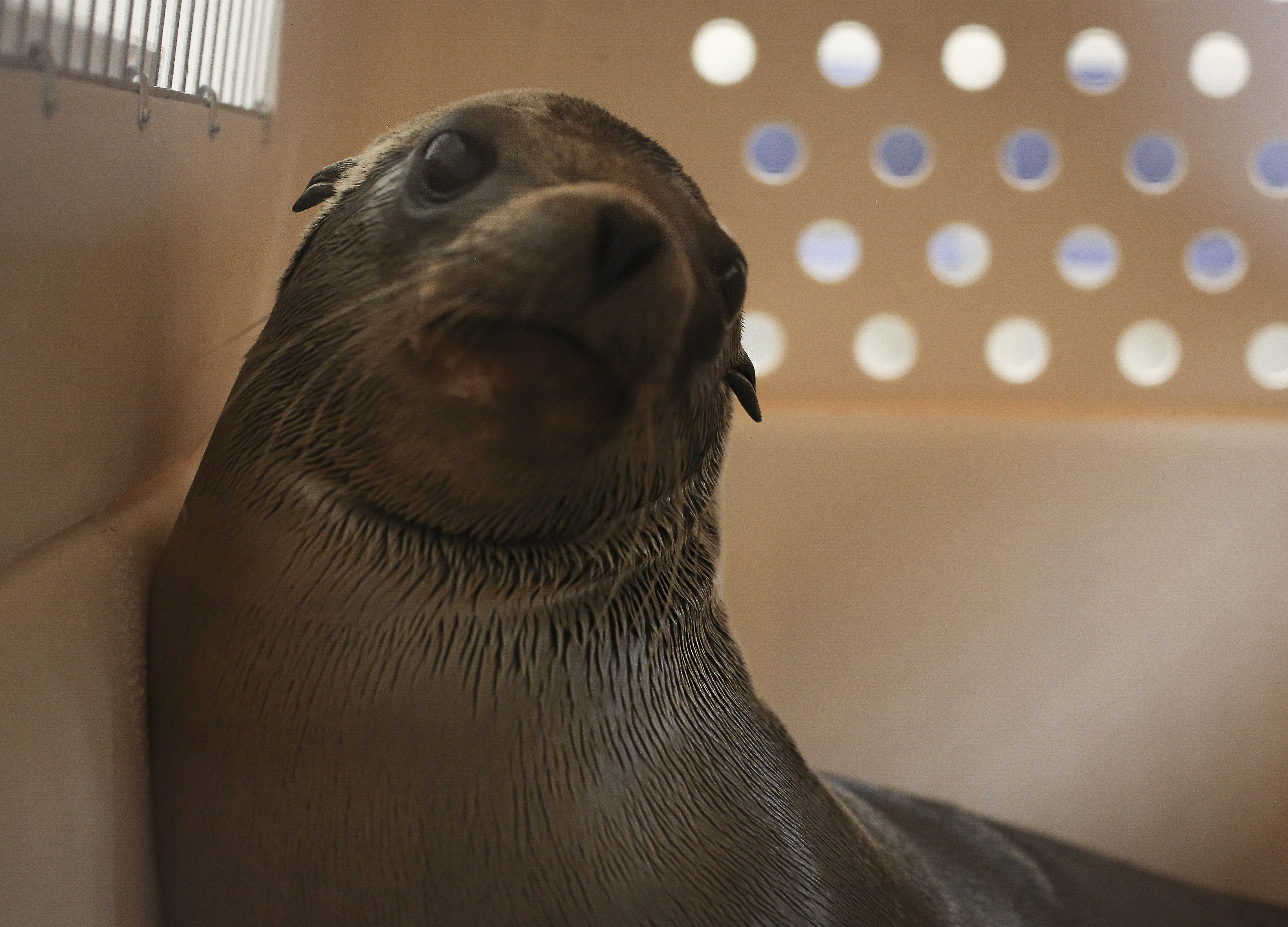
 Meet Ripley!
Search
Search results for ""
348 Results Found
Pages
Marine Mammal Resources International Marine Animal Trainers' Association (IMATA): www.imata.org Alliance of Marine Mammal Parks and Aquariums (AMMPA): www.ammpa.org American Zoo and Aquarium Association (AZA): www.aza.org Animal Behavior Management Alliance (ABMA): www.theabma.org European Assocciation for Aquatic Mammals (EAAM): www.eaam.org International Association For Aquatic Animal Medicine (IAAMA): www.iaama.org.au Society of Marine Mammology: www.marinemammalscience.org Seal Conservation Society: www.pinnipeds.org ADF&G Wildlife Notebook Series: www.adfg.state.ak.us/pubs/notebook/notehome.php GeoZoo: www.geozoo.org Pacific Marine Mammal Center: www.pacificmmc.org Conservation Organizations Marine Mammal Center: www.marinemammalcenter.org/ Ocean Conservancy: www.oceanconservancy.org Ocean Conservation Society: www.oceanconservation.org Polar Bear International: www.polarbearsinternational.org Partnerships
Pages
If you would like to mail in your donation, checks can be made out to Ocean Connections and mailed to: Ocean Connections 10001 W. Bluemound Road Milwaukee, WI 53222 Please be sure to include the following information: Your Name Email and contact information An Optional Message YOU can make a difference in the lives of the animals at Ocean Connections! < < Back to GIVING BACK
Pages
Want to keep up with what's new at Ocean Connections? Read all about our specials, program highlights, featured animals, conservation tips, and how you can sponsor a seal or sea lion by joining our fanclub! We will keep you up to date on your favorite animals as well as current events. No need to worry, we consider your email address private and it will never land on anyone else’s doorstep. Join the Ocean Connections FANCLUB to learn more about the seals and sea lions at Ocean Connections, receive promotions, and notifications about specials we're running. Join Now! * required Email Address: * First Name: Last Name: Enter the letters shown above:* hex_chars=Array('0','1','2','3','4','5','6','7','8','9','a','b','c','d','e','f');hash='';hash_length=20;for(h=0;h
Pages
Ocean Connections is dedicated to the field of marine mammal science and education. It is our goal to provide the best possible environment, training and care for our marine animals with the focus of educating the public about marine life, environmental protection and conservation. We encourage you to learn more about current conservation issues and simple steps we all can do to help protect our environment. Everyone can make a difference by choosing sustainable seafood, picking up litter and observing wild animals from a safe distance. Learn more tips by exploring our conservation resources. Saving the world may sound complicated, but it starts simply by having an appreciation for the world in which you live.
News Item
We recently celebrated National Children’s Craft Day with this sea lion puppet craft! If you want to make your own, download the template below. Download our Puppet Template!
News Item
You've fallen in love with her big eyes and the way she bounces along the land; now enjoy swag featuring TikTok's favorite harbor seal: Mango! We are thrilled to announce that sweatshirts, t-shirts, stickers, and mugs are now available that all feature a beautiful image of our rescued, female, Atlantic harbor seal, Mango. All proceeds from our merchandise directly contribute to the care and welfare of our seals and sea lions. Get yours today by clicking here.
Pages
What is marine debris? Marine debris is any man-made object that enters the coastal or marine environment. From the tiniest piece of plastic to giant free-floating fishing nets, ocean pollution causes many challenges for animals in the wild. This debris may enter the oceans through a variety of avenues including direct addition or indirect sources when it is washed out to sea via rivers, streams and storm drains. Marine debris impacts all aspects of life. Animal health and safety are major concerns as animals become entangled in discarded waste or ingest foreign objects mistaken for food. In addition to the effects on animal well-being, ocean pollution presents problems for fishing industries, human health and safety, and provides an unappealing view of our world’s most precious resource. The impacts on the world’s economy and biodiversity are detrimental to life as we know it. Garbage Patches A garbage patch is an area of marine debris concentration. There are two garbage patches located in the North Pacific Ocean. These large accumulations of trash are composed of many different kinds of debris, much of which is comprised of small bits of floating plastic from land and ocean based sources. Ocean currents and circulation patterns trap the material in a cyclone of water creating large areas of ocean trash. Garbage patches can form in the open ocean or in areas closer to land where marine life is prevalent. Because the ocean patterns alter annually and change in response to environmental factors such as El Niño, the size of these garbage patches and exact location do not remain stagnant. The characteristics of each garbage patch changes in response to ocean conditions making it difficult to determine their true ecological footprint. The Great Pacific Garbage Patch is comprised of marine debris brought together by slow moving ocean currents. The patch’s size is not known but some scientists estimate it to be twice the size of Texas and weighing approximately 3.5 million tons. Approximately 80% of the marine debris comprising the garbage patch comes from land that is washed into the Pacific Ocean with 20% entering the ocean from cargo, fishing and other oceangoing ships that spill their contents. Though the Great Pacific Garbage Patch is a large conglomerate of trash in the ocean, it is not the only place marine debris exists in the Pacific. Currently, some islands in the Hawaiian archipelago are covered with piles of trash up to 10 feet deep. The Great Pacific Garbage Patch continues to grow on a daily basis and will eventually land ashore bringing its contents with it. Common Debris Trash in the ocean kills more than one million seabirds and 100,000 marine mammals and turtles each year through ingestion and entanglement. Plastics and fishing gear greatly contribute to the problem. Plastic Some of the most common types of marine debris are plastics. Plastics are very prevalent in our society and they come in many different kinds of shapes and sizes. Every hour, Americans use 4 million plastic bottles, yet only 1 out of 4 is recycled. When items are thrown away, they end up in either a landfill or the ocean. Plastics were designed to last and they take an incredible amount of time to biodegrade, approximately 400 years! Ocean trash takes longer to biograde than trash in a landfill because the water is cold and does not receive the same intensity of sunlight which is instrumental in degradation. Though many plastics will degrade into tiny pieces, most never completely disappear. In fact, over 46,000 pieces of plastic debris float on every square mile of ocean. These microplastics will continue to cause harm in the marine ecosystem because they intermix with plankton that are then consumed by animals feeding in the ocean. Fishing Gear Lures, monofilament line, hooks and other fishing equipment creates major problems for marine life. Many animals swallow these objects while they mistake it for food or become entangled in fishing line that has been left behind. Researchers believe it will take 600 years for monofilament fishing line to biodegrade in the ocean. Some of the most detrimental forms of pollution left behind by fisherman are ghost nets. Whether done so intentionally or unintentionally, commercial fisherman leave large fishing nets, sometimes miles in length, out at sea. When these nets are lost, they continue to fish, catching anything that is in its path that cannot escape through the mesh. This results in the entanglement of thousands of animals that either view the nets as food, shelter or accidently swim into them. Extreme Litter Unfortunately, most of us have seen common litter wash upon the shoreline but have you ever seen anything unusual like a home appliance on the beach? Ever encounter a refrigerator floating by as you traveled by boat to a remote fishing spot? It is not uncommon to find large pieces of equipment that have been dumped at sea or are carried there by a natural phenomenon. As we experience more extreme weather, our oceans are becoming dumping grounds for construction materials carried to the sea after hurricanes, floods and tsunamis. These items such as washers, dryers, refrigerators and the like create a different level of environmental concern. Under the influence of sunlight, wave action and mechanical abrasion these appliances simply break down slowly into ever smaller particles but they do not biodegrade like natural materials and usually contain harmful chemicals. Impacts Marine debris poses a deadly threat to marine and coastal ecosystems. Hundreds of thousands of sea turtles, seabirds and marine mammals are killed annually when they ingest or become tangled in plastic debris. Plastic bags floating through the water resemble jellyfish, a favorite meal for a sea turtle. Fishing lures, hooks, and lines can be swallowed and cause internal injuries. Looped debris such as six-pack rings, rubber bands, packaging material and discarded fishing nets can cause entanglement issues for a variety of marine species. When animals ingest foreign objects they may suffocate or die of starvation. Six-pack rings stunt animal growth and cut into their skin causing injuries. Ghost nets entangle marine life causing them to drown. As trash continues to accumulate in our oceans, these threats continue to grow as well. Marine animals are constantly faced with challenges from pollution that make it difficult to survive in the wild. Take Action Against Ocean Pollution Marine debris can seem like an overwhelming problem but there are simple steps you can take to help keep our oceans clean. Cut apart six-pack plastic rings. If left uncut in the trash, they can make their way to the ocean and trap an unsuspecting animal. Bring your own reusable shopping bags whenever you shop. Participate in a beach clean-up. Always take a bag with you when you go to the beach and pick up what you can. Every little bit makes a difference. Be sure to properly dispose of fishing lines and lures, as animals can mistake them for food if they end up in the water. You could even try to use biodegradable fishing lines on your next fishing trip. Select reusable items whenever possible and repurpose old items. Try buying milk in glass containers that can be returned to the grocery store. Recycle everything. More and more items can be recycled if you take advantage of proper recycling stations and centers. Bring your own reusable cup to the café when you buy that morning latte. Carry a reusable water bottle to work and school Sources Marine Mammal Center www.marinemammalcenter.org NOAA: Marine Debris www.marinedebris.noaa.gov Northern Illinois University:Plastic Facts www3.niu.edu/recycling/alum_facts/page4.html
News Item
Ocean Connections is bringing our Marine Mammal Summer Camp to Hershey this August. Each day includes opportunities to learn about and interact with our seals and sea lions on top of exploring ZooAmerica. Learn more or register today by clicking here. Questions? Contact us at education@oceanconnections.org.
News Item
Ocean Connections is bringing our Marine Mammal Summer Camp to Hershey this August. Each day includes opportunities to learn about and interact with our seals and sea lions on top of exploring ZooAmerica. Questions? Contact us at education@oceanconnections.org.
Pages
In 1972, Congress passed the Marine Mammal Protection Act (MMPA). This act prevents the harassment, capture, injury and killing of all species of whales, dolphins, seals, sea lions, walruses, manatees, dugongs, sea otters, and polar bears. Through this act, many marine mammal lives have been saved thanks to efforts of the National Marine Fisheries Service (NMFS) and the U.S. Fish and Wildlife Service (FWS). Together, these two governmental agencies oversee the enforcement of the Marine Mammal Protection Act to help protect wild populations and our ocean ecosystems from detrimental interactions with humans. Let’s celebrate the grace and beauty of marine mammals and give thanks to the Marine Mammal Protection Act and its advocates for protecting these magnificent animals for 40 years! Do your part to help keep all wild animals safe by always observing them from a safe distance, never approaching a wild animal or trying to feed them.Visit a local zoo or aquarium to learn more about these fascinating creatures and find tips to help protect our environment. Together, we can help keep the ocean ecosystem balanced, marine mammal populations abundant in the wild and promote a curiosity and sense of wonderment in our oceans for our future generations to enjoy! Watchable Wildlife Tips Leave no trace. It’s important to leave the environment as you found it or in a more pristine state than what you encounter. Be sure to dispose of your waste properly when out on a hike, exploring in a forest or walking along the beach. Better yet, lend a hand and pick up stray litter to help protect wildlife. Keep your distance. Always view wildlife from a safe distance. Do not disturb animals, approach or try to feed them. Wild animals can be unpredictable and protective of their young and shelter. Use binoculars to view wild animals without disrupting their natural way of life. Stay away from wildlife that looks sick or injured. If you come across a sick or injured animal, do not try to help the animal yourself. Instead, call your local animal shelter or wildlife rescue and rehabilitation center and give them details about the animal. These trained professionals will be able to provide care in a safe setting to help the injured animal.
News Item
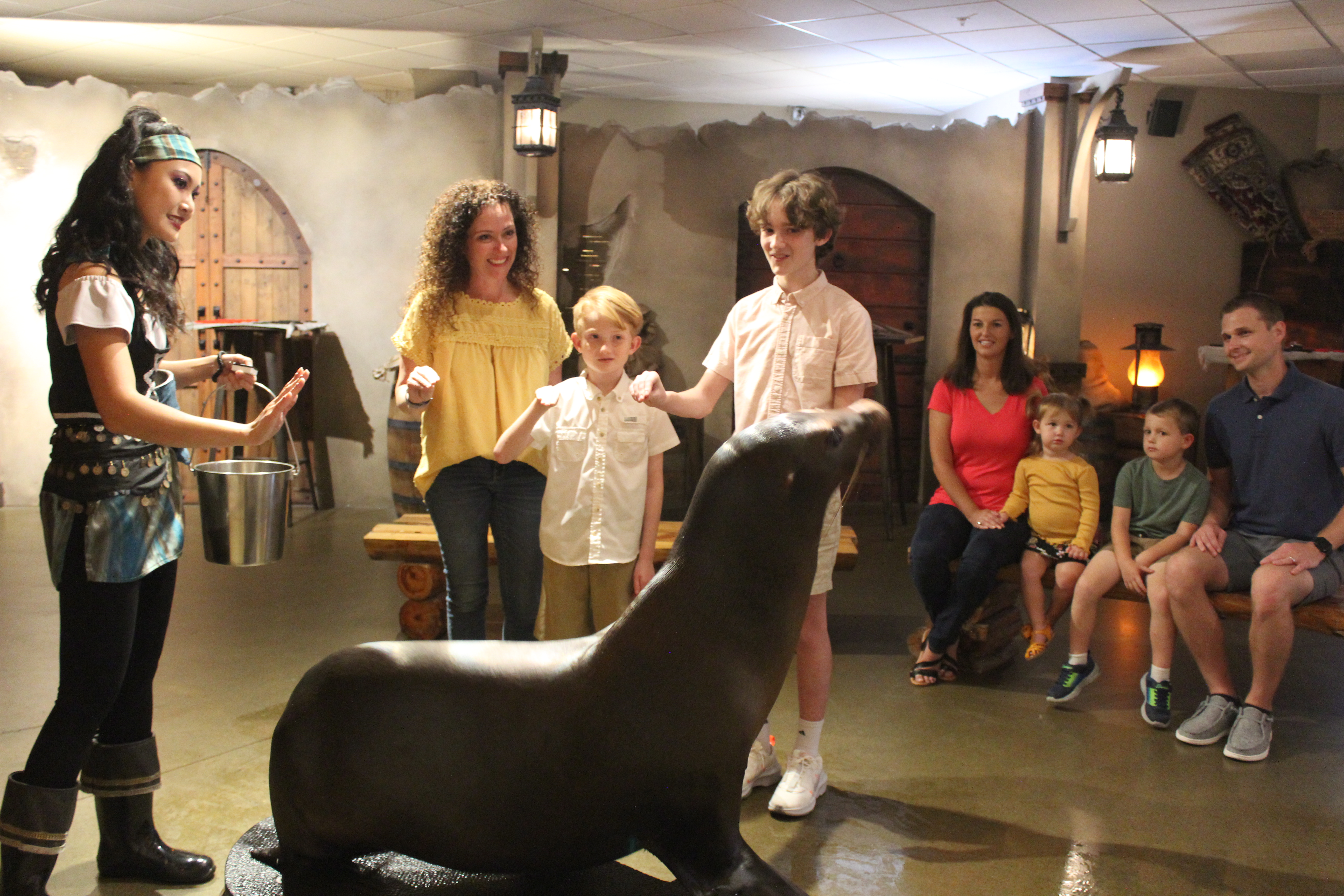
The summer may be over, but our fall season is just beginning! The change of the season marks an exciting time for staff and animals. There is more time to focus on training new behaviors and, of course, we are excited to be able to offer meet and greets! Meet and greets are a great opportunity for zoo patrons to see and interact with our animals in an up close and personal setting. As a guest, you will enjoy a brief educational presentation featuring our seals and sea lions and then families will get to come down as groups for animal interactions! A trainer will teach you and your family several hand signals to ask our flippered friend and assist you in feeding them fresh fish! This exciting program is currently offered most weekdays, pending weather and animal behavior. Guests interested in attending a Meet & Greet should visit our Sea Lion Shoppe located outside our stadium for the daily schedule and to sign up for the program. Participation is limited to 25 guests and offered on a first come, first serve basis. Registration is $5 before tax per individual. Children ages 2 and under are free of charge. Participants must be 4 years or older to feed the animals. Photography and video recording are not allowed during the program – optional posed photos are available with one of our animals following each program for an additional cost.
Pages
Meet Bumper! Juvenile male Atlantic harbor seal Average weight is 130 pounds Born June 14, 2009 Arrived at Ocean Connections in January 2012 Bumper is one of the youngest members of the Ocean Connections family! He is a 3 year old, juvenile male Atlantic harbor seal. Bumper was born at the Long Island Aquarium in New York where he shared his pool with 4 other harbor seals and a rescued grey seal. In New York, Bumper was on exhibit where he played with his pool mates and began his formal training when he was a few months old. Over the past year, Bumper has adjusted well to his new home filled with seals, sea lions, educational shows and interactive programs. This youngster has begun working with guests to help teach about marine mammals and animal training. He has learned new husbandry behaviors to assist in his own health care and also fun, high energy behaviors such as a ball touch to delight visitors of Ocean Connections. Bumper is cute, cuddly, and always looking for new adventures. We are all very excited to watch Bumper learn, grow and build relationships with his new family at Ocean Connections!
Pages
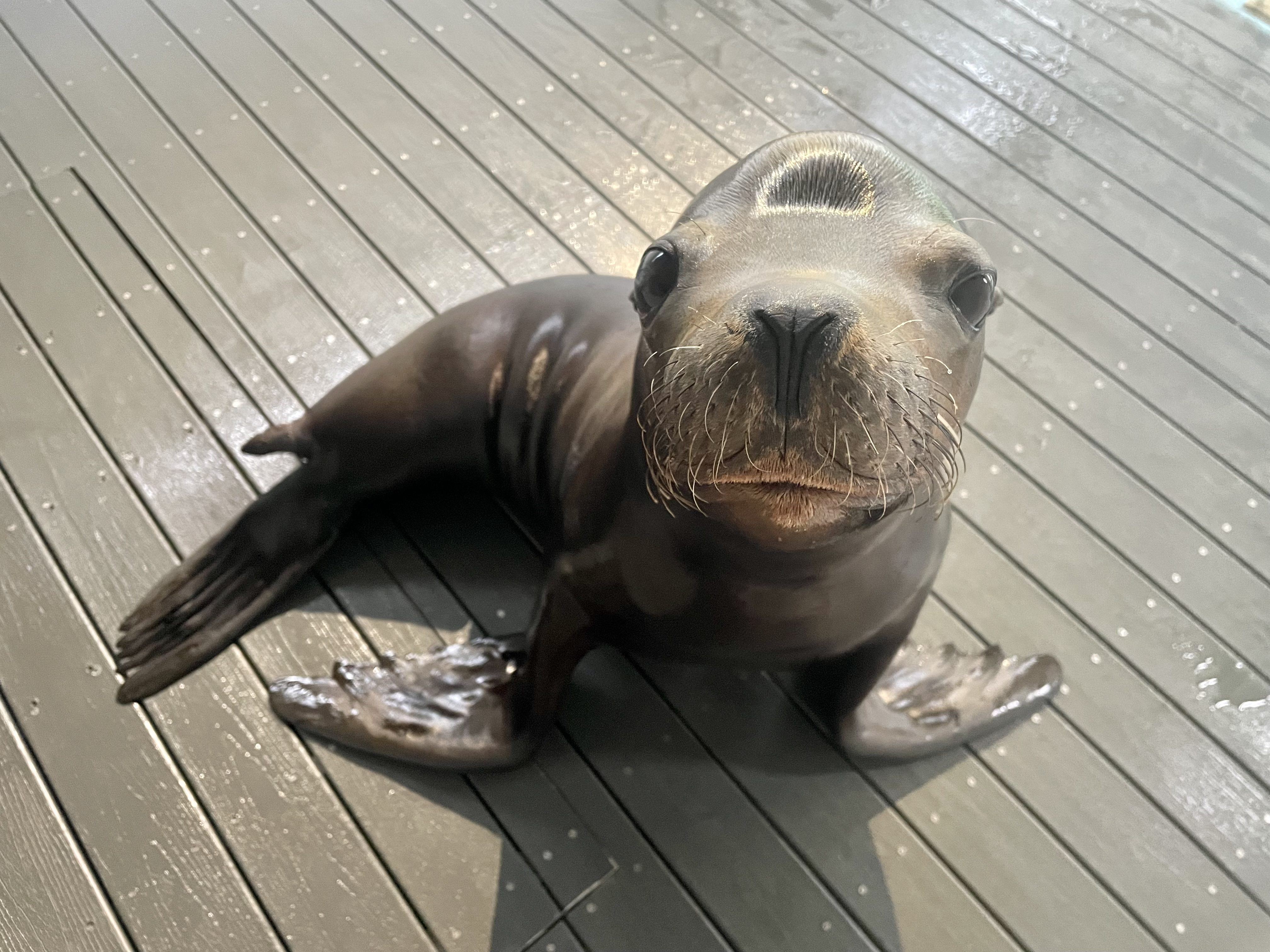
Meet Colby! Male California sea lion pup Born June 20, 2012 Son to Makaia Average weight is about 75lbs Born in the evening of June 20, 2012, Colby has been growing and learning quickly under the watchful eye of his mother. As a young pup, Colby spends his days playing and interacting with his trainers. Play behavior is very important for a young animal as it helps Colby to develop strength, coordination and build relationships. He can often be found playing with toys, chasing his flippered friends in the main pool and nuzzling up close with his trainers in hopes of a belly rub! Sea lion pups do not know how to swim when they are born. In the wild, these animals gain comfort in the water by splashing in the waves and playing in the shallows. At Ocean Connections, Colby first played in a kiddie pool while he learned to dive, hold his breath and blow bubbles in the water. Slowly we acclimated him to deeper depths and actually gave him swimming lessons in our holding pools before venturing out to our main pool that is 18 feet deep. Already weighing 75 pounds, Colby is a strong and healthy young sea lion. He enjoys exploring the main pool and meeting new friends who visit Ocean Connections. Click Here to follow Colby's growth and learning!
Pages
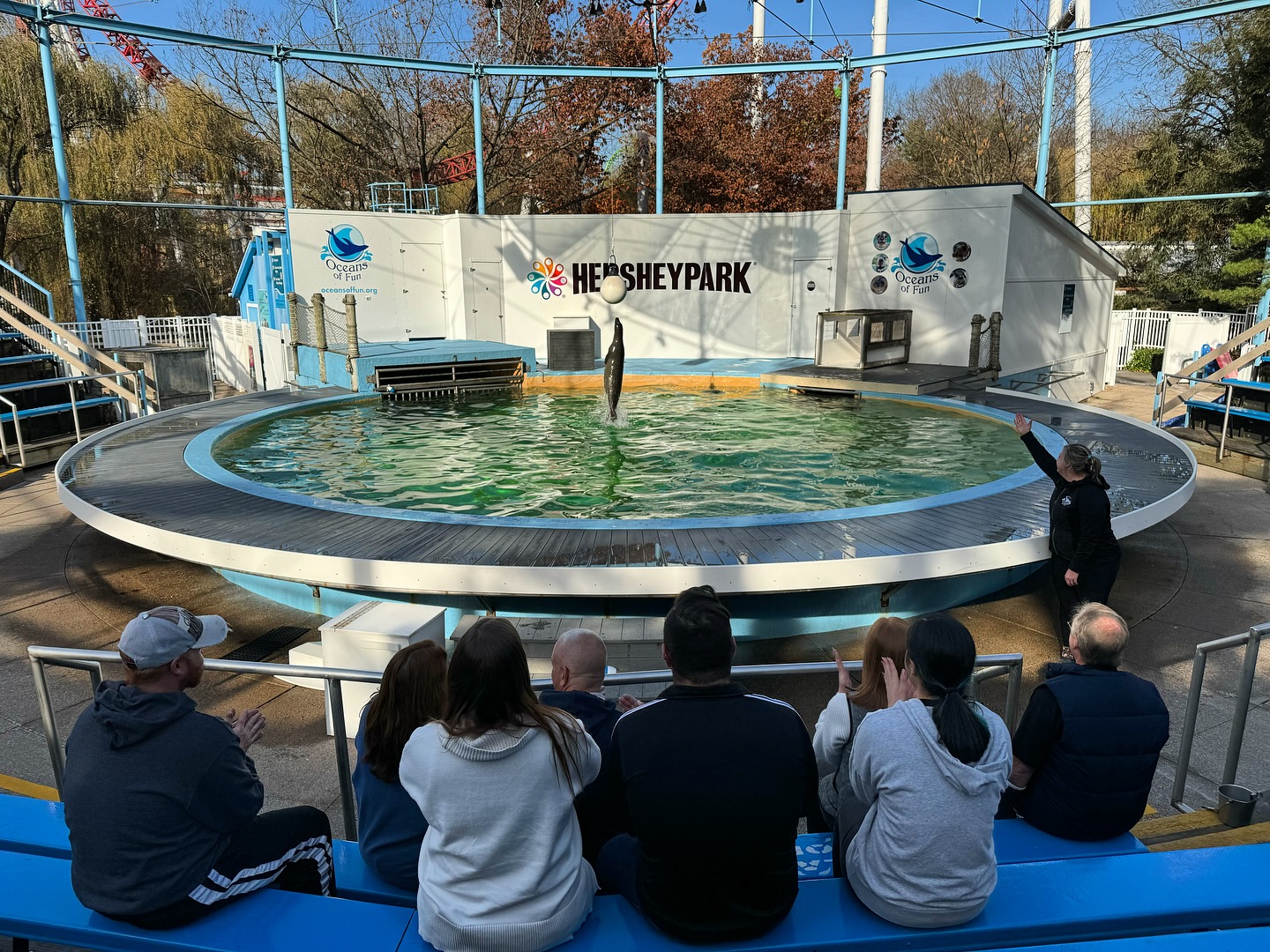
Meet Diego! Juvenile male Growing leaps and bounds he already weighs 250 pounds Born on April 11, 2004 Born to Makaia and Slick Diego is a spunky, juvenile male sea lion. Born to Makaia and Slick on April 11, 2004, Diego is an affectionate and lovable animal. Diego's birth surprised us in the spring of 2004, as he arrived very early in the season. Although sea lions don't usually pup until mid-summer, this little guy arrived full term wieghing 13 lbs on Easter day. Diego weaned from his mother at 10 months of age and today eats approximately 18 lbs of fish each day and weighs 250 pounds. He loves training and currently knows approximately 75 different behaviors. In the summer of 2009, Diego (along with his trainers) began traveling to Hersheypark in Hershey, PA to star in a new summer show. Each fall Diego returns along with his poolmates to Milwaukee where his training continues. This past year Geneva joined Diego in Hersheypark for the summer season. Diego is now back in Wisconsin enjoying the fall and winter with his pinniped pals at Ocean Connections.
Pages
Meet Harley! Sub – Dominant Male Average weight is approximately 500 pounds Born June of 2002 off the coast of California Arrived at Ocean Connections in April of 2009 Harley is the newest addition to our Ocean Connections family. He is our 7 year old California Sea Lion who came to us from the Brookfield Zoo in Illinois. Harley was actually born in the wild and was rescued two times as a stranded pup on the beaches in California. While at the marine mammal stranding center, medical testing was done and it was found that Harley was in fact deaf. Being deaf this made Harley a non releasable animal. Due to his deafness, Harley’s survivability rate in the wild would have been very low. Once this was determined he then found his home at the Brookfield Zoo. Harley moved to Ocean Connections in May of 2009 in order to breed and join our existing colony of sea lions. Harley is a very fun and unique animal who thrives on the attention of his trainers and other animals. He is an extremely quick learner and enjoys training, performing in presentations, and relaxing poolside. Harley will start shows this season. Be sure to stop bye and visit our newest performer!
News Item
Welcome to Kanuk and Kodiak! These two pups, estimated to be 1-year old, were rescued by stranding centers after being found stranded and malnourished off the coast of California this spring. Each of the pups stranded repeatedly prompting the National Marine Fisheries Service to deem them non-releasable. They join more then 3,500 California sea lion pups this year who have been rescued off the coast of California. Scientists believe this unusual mortality event is due to warmer water temperatures driving fish populations away and causing sea lion mothers to leave their pups in search of food. After several unsuccessful attempts to release Kanuk and Kodiak, Oceans of Fun along with the Brookfield Zoo in Brookfield, IL were asked to assist by providing care and permanent homes for the pups. When animals from the wild arrive to zoos and aquariums, they undergo a quarantine period to ensure they are healthy and will not transmit disease to other animals. The decision was made to keep the pups together through transport and quarantine to ensure their comfort and success. Oceans of Fun and the Brookfield Zoo have shared a long term partnership committed to the welfare, breeding and conservation of pinnipeds for years. In late July both marine mammal teams worked together to safely transport Kanuk and Kodiak from California to the Brookfield Zoo. Today we are thrilled to be able to introduce Kanuk and Kodiak to all of you as the veterinary teams have announced that they have cleared quarantine, are strong and healthy. Kanuk will join the Oceans of Fun family soon. We expect to welcome him to the Milwaukee County Zoo this winter while Kodiak will make his home at the Brookfield Zoo. Both lucky little pups are ambassadors who will now educate the public on marine mammal conservation and plight of our oceans. Oceans of Fun is committed to conservation status of pinnipeds in the wild. Earlier this year Oceans of Fun was called upon to assist the rescue centers as the number of stranded pups set record highs. Due to our knowledge and expertise with sea lion pups, Oceans of Fun team members traveled to the coast in assistance with rescue and care. Additional support was raised through fundraising efforts in Milwaukee providing monetary support for medical needs, fish and animal care. In 2013 Oceans of Fun stepped in to rescue and hand rear Nalu, then a three month old sea lion pup who was found without his mother. Still requiring 24 hour care, Nalu was unable to survive in the wild. Today, Nalu is a healthy 2 year old and an ambassador to his species in the wild, just as Kanuk and Kodiak will become. We are proud to educate Milwaukee County Zoo patrons on ways to live environmentally friendly lives to improve these animals’ habitats and ensure survival. To receive up to date information on Kanuk and Kodiak, be sure to follow us on Facebook! Guests can see Kanuk and Kodiak on exhibit with Brookfield’s other sea lions, harbor seals, and gray seals at their Pinniped Point exhibit. You and your families can help sea lion pups like Kanuk and Kodiak by donating and supporting stranding centers as well as making environmentally responsible decisions. Photo Credit:Jim Schulz/Chicago Zoological Society Photo Caption: Kanuk (front) and Kodiak with Mairim Martinez, a marine mammal specialist at Brookfield Zoo’s Pinniped Point habitat.
News Item
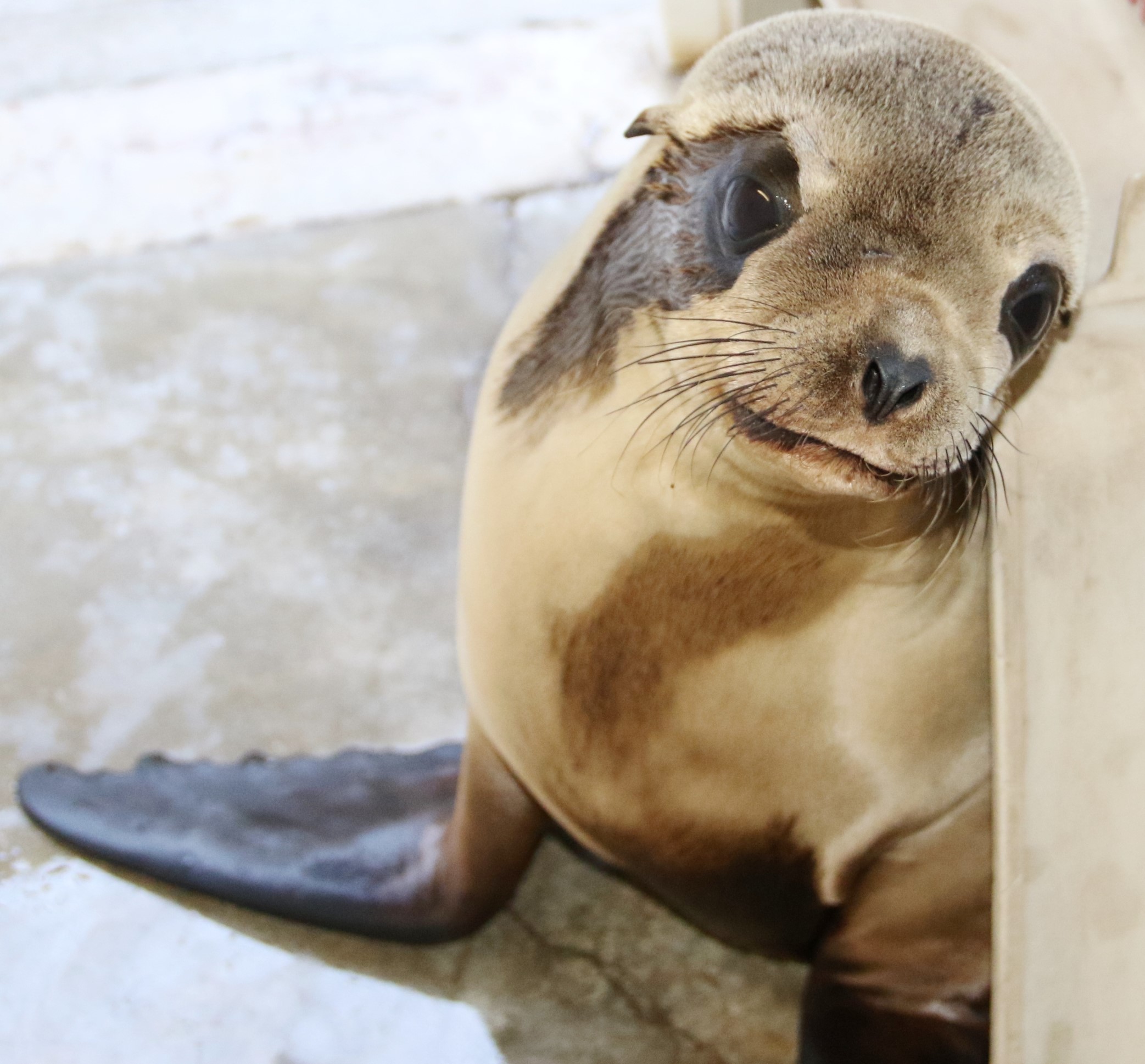
Meet the newest member of the Oceans of Fun family, Moana! For the third time, Oceans of Fun has been asked to provide a forever home to a California sea lion that has stranded off the coast of California. Moana was found trapped in a storm sewer very lethargic, cold, and alone. The Pacific Marine Mammal Center was able to rescue her and estimate that she was only about four months old. California sea lions will nurse from their mothers for 6-12 months but her mother was nowhere to be found. She was given around the clock care and bottle fed until she was able to begin consuming fish. Due to her young age, she lacked the necessary skills to be successful foraging for food on her own. She was then deemed non-releasable and Oceans of Fun was contacted to provide her with a home. Moana would not have survived in the wild and is very fortunate to receive a second chance at life in her new home here in Milwaukee. Her case is not unique and since January of 2015 over 7,000 California sea lions have stranded in what the National Oceanic and Atmospheric Association has deemed an Unusual Mortality Event or UME. Oceans of Fun is extremely dedicated to Saving Species worldwide and will continue assisting not only with UME animals that have stranded but a variety of conservation projects related to marine mammal research, Great Lakes preservation, and more. Help us help them. If you are interested in learning more about Moana, our conservation efforts, and a way to get involved, please click here.
News Item
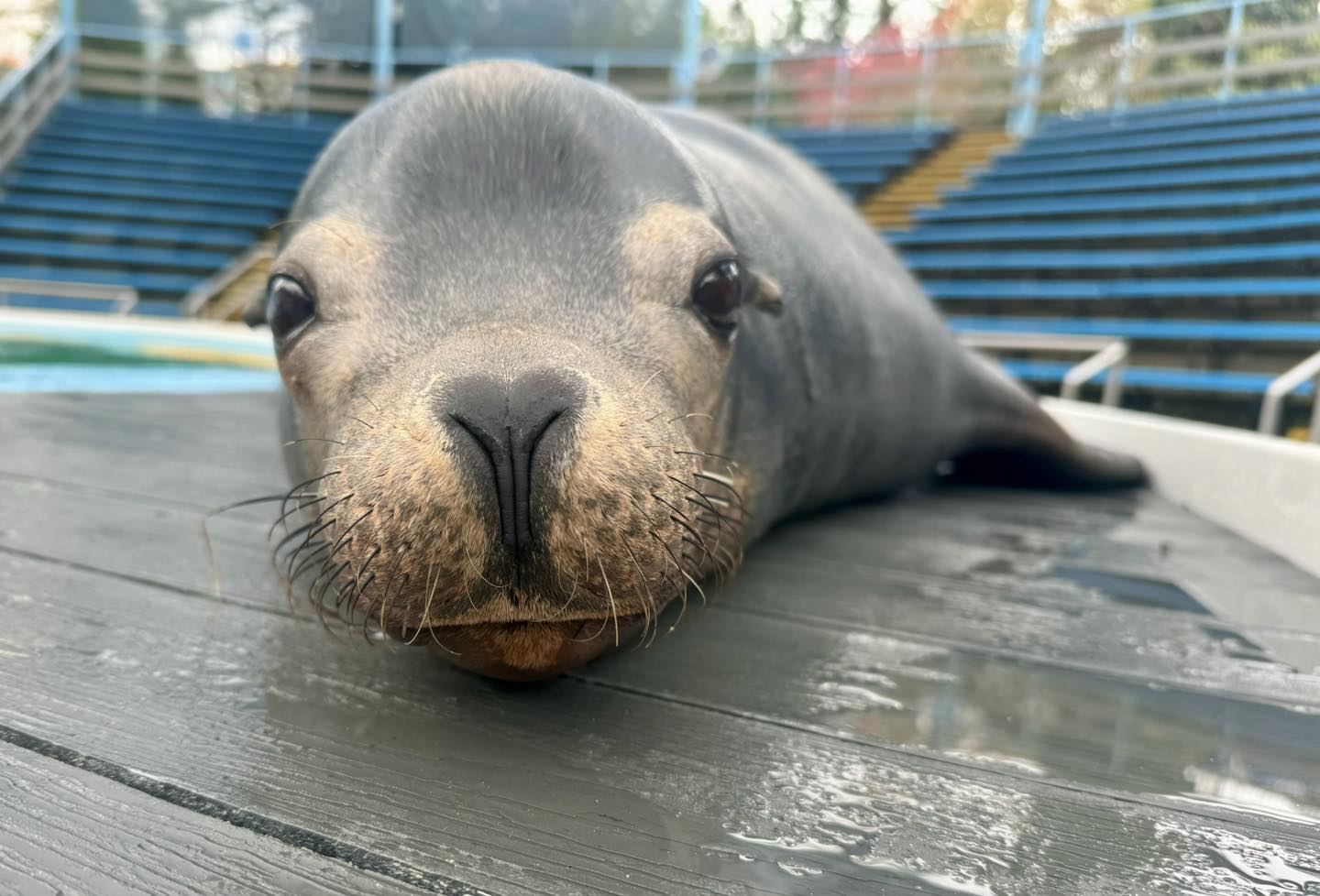
Nalu is a three-year-old juvenile male California sea lion. With an energy for learning and a love of working with our animal care team, we’re as lucky to have Nalu as he is to have us. In 2013, he was found extremely malnourished and dehydrated on the coast of California when he was four months old and his mother was nowhere to be found. He was rescued and rehabilitated but due to his young age he had no chance of survival and was deemed non-releasable. Oceans of Fun was then contacted and gladly accepted the task of giving him a forever home. We are extremely happy to announce that Nalu is a growing, healthy, and charismatic sea lion who is learning new behaviors every day. Being such a spunky sea lion, we thought you should all have the opportunity to learn from him and follow him on his adventures. Nalu is surfing onto the web and kicking off the holiday season with Nalu’s 25 Days of Conservation leading up to Christmas. The fun doesn’t stop there, though. Join us on the journey of a lifetime as we follow Nalu’s adventures and antics captured year-round! Don’t miss any of the action and be sure to like him on Facebook and follow @naluthesealion on Instagram and Twitter!
