





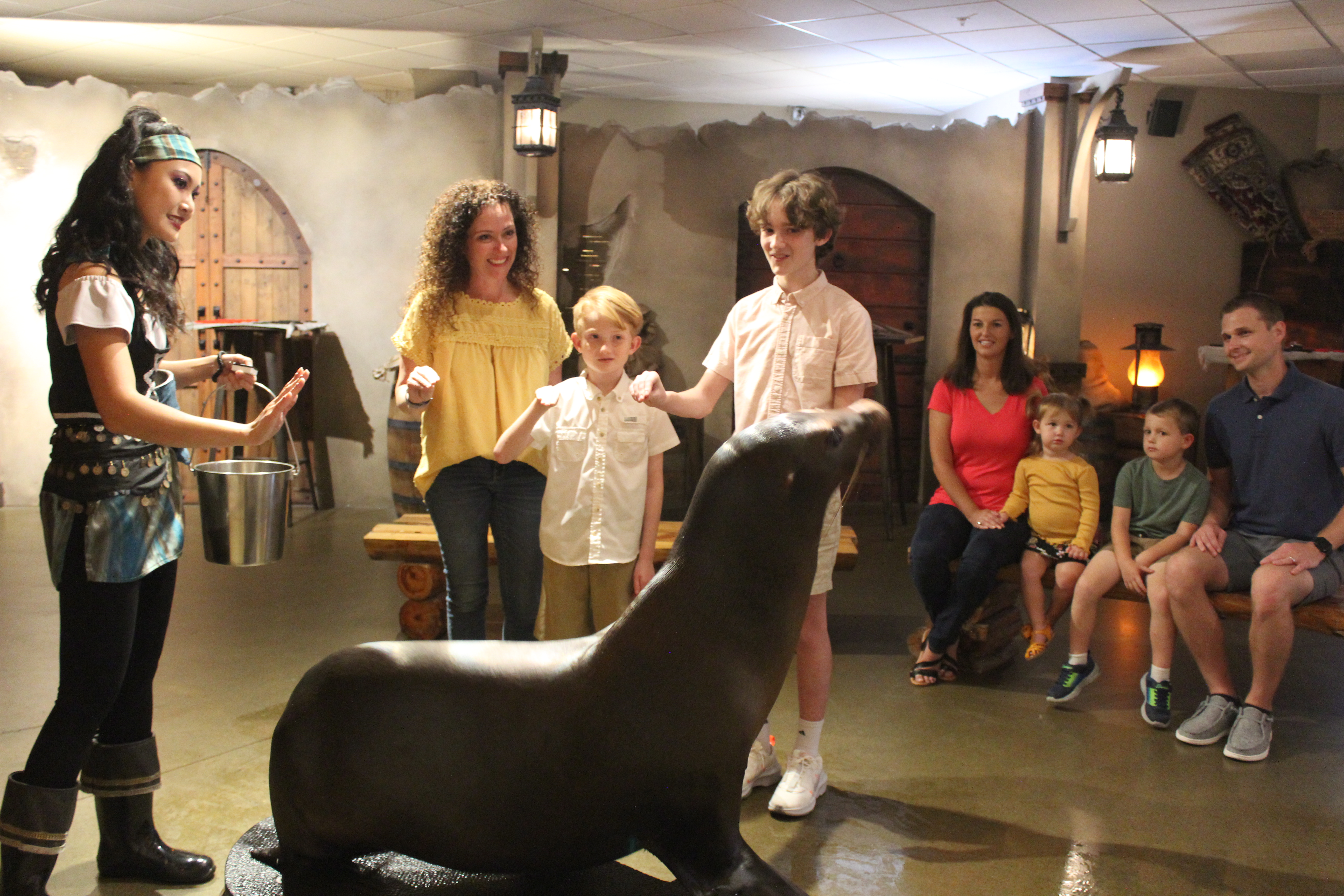
 Animal Encounter
 Our Locations
 Family Fun
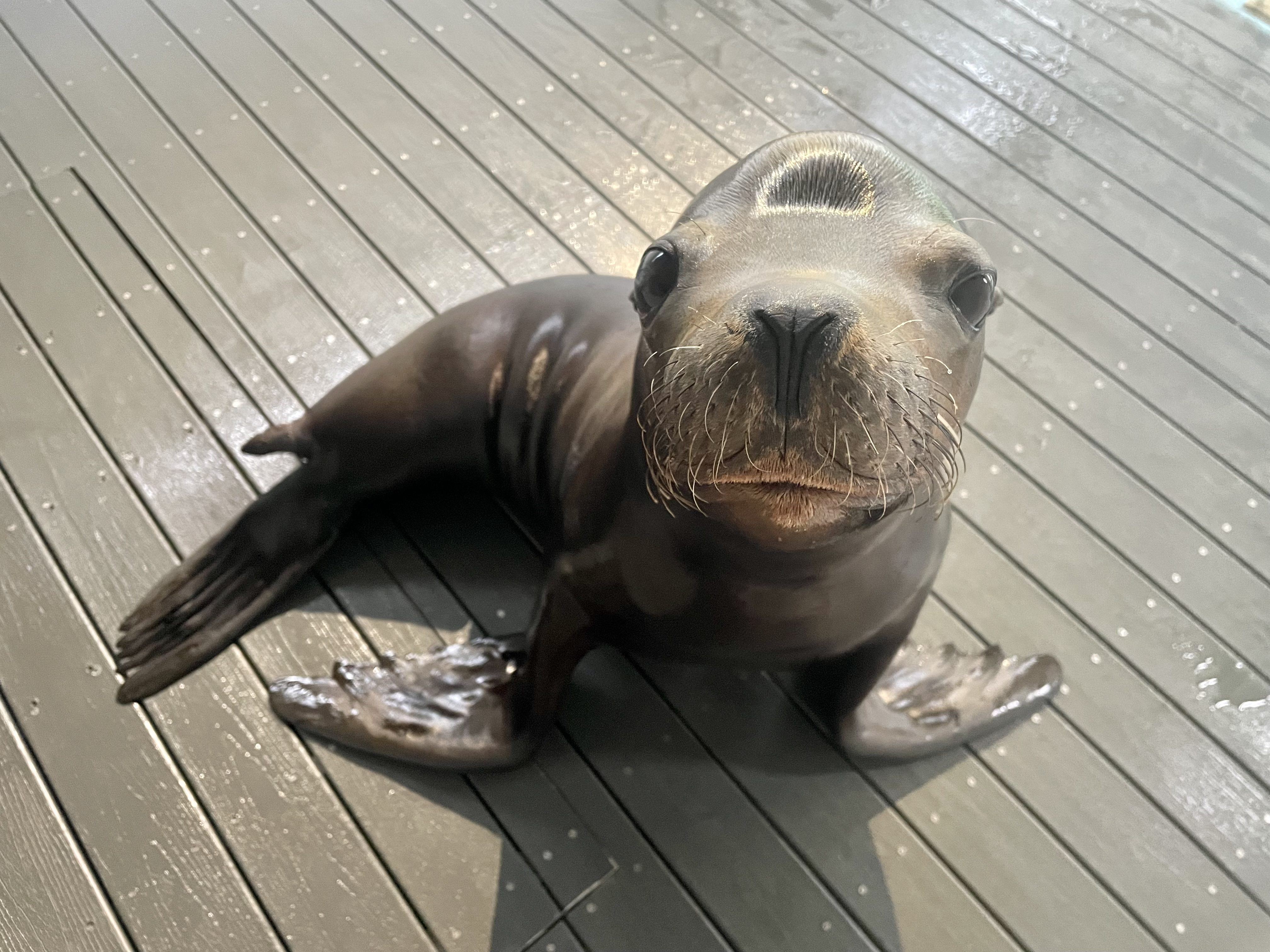
 Meet Ripley!

Search
Search results for ""
348 Results Found
Pages
All items purchased at OCEAN CONNECTIONS may be returned for a full refund within 30 days of the original delivery. Returned merchandise must be unopened to receive full credit. If the item is defective, please provide a written statement describing the damage and what action you would like to be taken (refund money or send another item). No returns will be accepted after 30 days. We will credit you in the same manner as your original payment within seven (7) days of receiving the returned item.
Pages
Ocean Connections is committed to animal conservation globally. Recently our conservation efforts have led to the Alaskan coastline and one of the largest walrus sanctuaries in North America. Round Island is one of 7 small islands that are protected by the Walrus Islands State Game Sanctuary (WISGS). This string of islands located in Bristol Bay, AK forms a sanctuary for several species of seabirds, Stellar sea lions and is one of the largest terrestrial haul out sites in North America for pacific walrus with counts of 2,000 – 5,000 walrus residing. The remote wilderness is uninhabited with the exception of a small field camp on Round Island which provides the opportunity for wildlife to be monitored and the sanctuary protected. With the amount of sea ice decreasing due to climate change, studying the population patterns of the Pacific walrus at these protected land haul out sites can provide us with much needed information regarding their habits including information about their breeding season, haul out time between food dives, length of food dives before returning to haul out, frequency of disturbances, results of disturbances and so much more. The Alaska Department of Fish and Game provides staff at a Camp on Round Island through the summer months. These staff members are responsible for a number of duties that aide in protecting and monitoring the Island and its inhabitants. In 2015, some of their duties included installing 5 live webcams around the island, conducting daily population counts and various data collection, aiding in the remote imaging of haul out spaces, monitoring the island for possible disturbances that may cause the walrus to flee, and helping to minimize the sources for disturbances. As one of the largest members of the pinniped family, which includes seals and sea lions, walruses are a critical member of the marine ecosystem. The Pacific walrus is found in the Bering and Chukchi seas, hauling out on sea ice and on the coasts of Alaska and Russia. ice is not available, the walrus population is forced to adapt and will move to rest on rocky shores and beaches. The success of their haul out space; however, is dependent on the availability of their food source, which includes clams, snails, and sea cucumbers on low depth beds below the sea surface. Walrus spend a great deal of their day exerting calories foraging; which requires repeated shallow dives in order to acquire a sufficient quantity of food. Between dives, walrus are dependent upon ice or beaches within close range to their foraging locations for rest. As the ice decreases, their ability to successfully reach their food source decreases as well, unless there is a nearby beach such Round Island which can serve as a haul out area for walrus. Life expectancy for the walrus can be up to 40 years; however, the change within our climate is impacting their survival. The health and stability of the walrus population is largely unknown at this time, due to the fact that walrus are a difficult species to study. Walrus are known to be a flighty species, meaning they will flee into the ocean for days on end due at even the slightest disturbance, such as crashing rocks or a passing boat. When walrus flee suddenly, a stampede occurs which often results to trampling of other animals, causing injury and death and can result in the colony remaining at sea for extended periods of time. Round Island plays an important role in the conservation of this specie allowing field researchers to learn more about their behavior, environmental needs and challenges through observation, all while protecting the resource of their environment which they are so dependent upon. Unfortunately, this past year, the Alaska Department of Fish and Game was unable to provide the funds to continue to staff Round Island as they have for many years. Ocean Connections is a part of a team of accredited facilities that is committed to supporting the continued efforts of the WISGS. Through the support of generous donations led by Ocean Connections, Alaska Sea Life Center, Pittsburgh Zoo and Aquarium, Georgia Aquarium and Point Defiance Zoo & Aquarium, Round Island continues to be staffed and operational during the summer months. These continued efforts in collecting valuable data and monitoring and protecting Round Island and its inhabitants, make it possible to learn more about the walrus, which will allow for a plan to be created and implemented that will hopefully aide in the longevity of the Pacific walrus. Learn more about Round Island and the Pacific walrus population here - http://www.adfg.alaska.gov/index.cfm?adfg=walrusislands.main (Photo Credit to Alaska Department of Fish and Game) Watch the live video feed during the summer months, or highlight reels during the off season here - http://www.adfg.alaska.gov/index.cfm?adfg=walrusislands.main Make a donation today to help support Ocean Connections and the work at Round Island. Click here! http://oceansoffun.org/giving_back
News Item
Oceans of Fun is committed to animal conservation globally. Recently our conservation efforts have led to the Alaskan coastline and one of the largest walrus sanctuaries in North America. Round Island is one of 7 small islands that are protected by the Walrus Islands State Game Sanctuary (WISGS). This string of islands located in Bristol Bay, AK forms a sanctuary for several species of seabirds, Stellar sea lions and is one of the largest terrestrial haul out sites in North America for pacific walrus with counts of 2,000 – 5,000 walrus residing. The remote wilderness is uninhabited with the exception of a small field camp on Round Island which provides the opportunity for wildlife to be monitored and the sanctuary protected. Learn more here!
News Item
Celebrate the holidays with the experience of a lifetime: bring the whole family to meet Santa Claus at Ocean Connections! Enjoy a family photo opportunity with Kris Kringle and one of our flippered friends. Before you conclude your time with us, give a fishy treat to our seals or sea lions so they’re ready to help Santa return to the North Pole. Learn more or make a reservation today by clicking here.
News Item
We were recently visited by Megan Pospychala from Fox6 News who helped provide an update about our rescued California sea lion, Moana, as well as share a very special announcement! Oceans of Fun is proud to share that we have opened Ocean Connections a separate, nonprofit organization we have piloted to further community engagement in conservation efforts. To celebrate the commencement of Ocean Connections we will be hosting our first annual Meals for Seals fundraiser on Wednesday October 3rd from 11:00AM-10:00PM at Highland House in Mequon. A portion of the proceeds from each entree will directly contribute to the animal welfare and conservation efforts of Ocean Connections. Join us for a night of good food for a good cause! Missed the big announcement? View it here! Unable to attend but interested in contributing? Help us, help them by donating today! You can even become a sponsor! For more information, contact us!
News Item
Save the Date! Ocean Connections is ecstatic to put the “fun” in fundraising as we support our mission of inspiring conservation awareness and public action for our world’s ocean through education. This year, we welcome Timbavati Wildlife Park and their beautiful, exotic, and educational animals from around the globe. Come nose to nose with species from all over the world and experience interactions beyond your wildest dreams. Conservation artist Stephen Fishwick also joins us to share his talents with a live creation. All proceeds directly benefit the education, conservation, and animal care programs of Ocean Connections. CLICK HERE TO LEARN MORE. Photography by: Louis Troutman & Keith Kamikawa.
Pages
The vaquita is a small species of porpoise found only in the northern Gulf of California and is nearing extinction at a rapid pace. Vaquitas were once thriving with close to 5,000 animals but since 2011 we have lost over 90% of this beautiful animal’s population. The most significant threat to the vaquita’s survival is entanglement in fixed fishing nets or gillnets. More than 300,000 whales, porpoises, and dolphins get entangled in fishing nets annually and most don’t survive. While gillnets are illegal, they are continuing to be used which is detrimental to the vaquita’s survival. If this issue is ignored, we will lose the vaquita forever. Organizations accredited by the Alliance of Marine Mammal Parks and Aquariums from around the world are contributing expertise and knowledge to assist these conservation efforts. We can’t do it alone and need your help! Help save the vaquita!
News Item
The vaquita is a small species of porpoise found only in the northern Gulf of California and is nearing extinction at a rapid pace. Vaquitas were once thriving with close to 5,000 individuals but since 2011 we have lost over 90% of this beautiful animal’s population. With only 30 vaquitas left in the wild, the most significant threat to their survival is entanglement in fixed fishing nets or gillnets. More than 300,000 whales, porpoises, and dolphins get entangled in fishing nets annually and most don’t survive. While gillnets are illegal, they are continuing to be used which is detrimental to the vaquita’s battle against extinction. If this issue is ignored, we will lose the vaquita forever. Organizations accredited by the Alliance of Marine Mammal Parks and Aquariums from around the world are contributing expertise and knowledge to assist these conservation efforts. We can’t do it alone and need your help! Help us save the vaquita!
News Item
Zoological institutions that are accredited by organizations such as the Association of Zoos and Aquariums (AZA) and the Alliance of Marine Mammals Parks and Aquariums (AMMPA), like Oceans of Fun, get inspected to ensure that species in human care receive topnotch healthcare and an exceptional environment to thrive in. These facilities in partnership with other conservation-based organizations, like the U.S. Fish and Wildlife Service, play a pivotal role in the protection and preservation of threatened or endangered species. Without accredited zoos and aquariums, the race against extinction would be lop-sided highly in favor in the disappearance of species. Unfortunately, the wild isn’t the wild anymore. Humans have encroached on the territory of animals spanning a wide variety of environments. From the seemingly barren deserts to lush rainforests, human-caused obstacles are making life in the wild a struggle for many animals. Pollution, global climate change, poaching, deforestation, habitat loss, and destructive fishing practices are just a few of the many problems we are inflicting on animals all around the globe. Ruining the environment is all of our problem and it is our responsibility to come together to protect this one planet we all share. One of the easiest ways to do this is by supporting accredited zoos and aquariums. These zoological institutions have dedicated time, effort, staff, and resources to combating extinction. Accredited facilities have breeding and reintroduction programs that are placing animals back in the wild that have been extinct in their natural habitats for decades or centuries. We are studying animals in human care so we can better serve their wild counterparts to ensure that even thriving populations continue to be successful in the wild. Due to the exceptional healthcare we are able to provide, animals in human care are living double or triple the lifespan of their wild counterparts. Every time you support an accredited organization, like Oceans of Fun and the Milwaukee County Zoo, you are supporting all of this and so much more. Extinction is forever and once a species truly disappears it can never come back. We can all work together to ensure that this single planet we all share is populated by all of these magnificent creatures and more for future generations to come. To read more about the challenges animals in the wild are facing and to find out more about how you can help start combating extinction right now visit our Saving Species page.
News Item
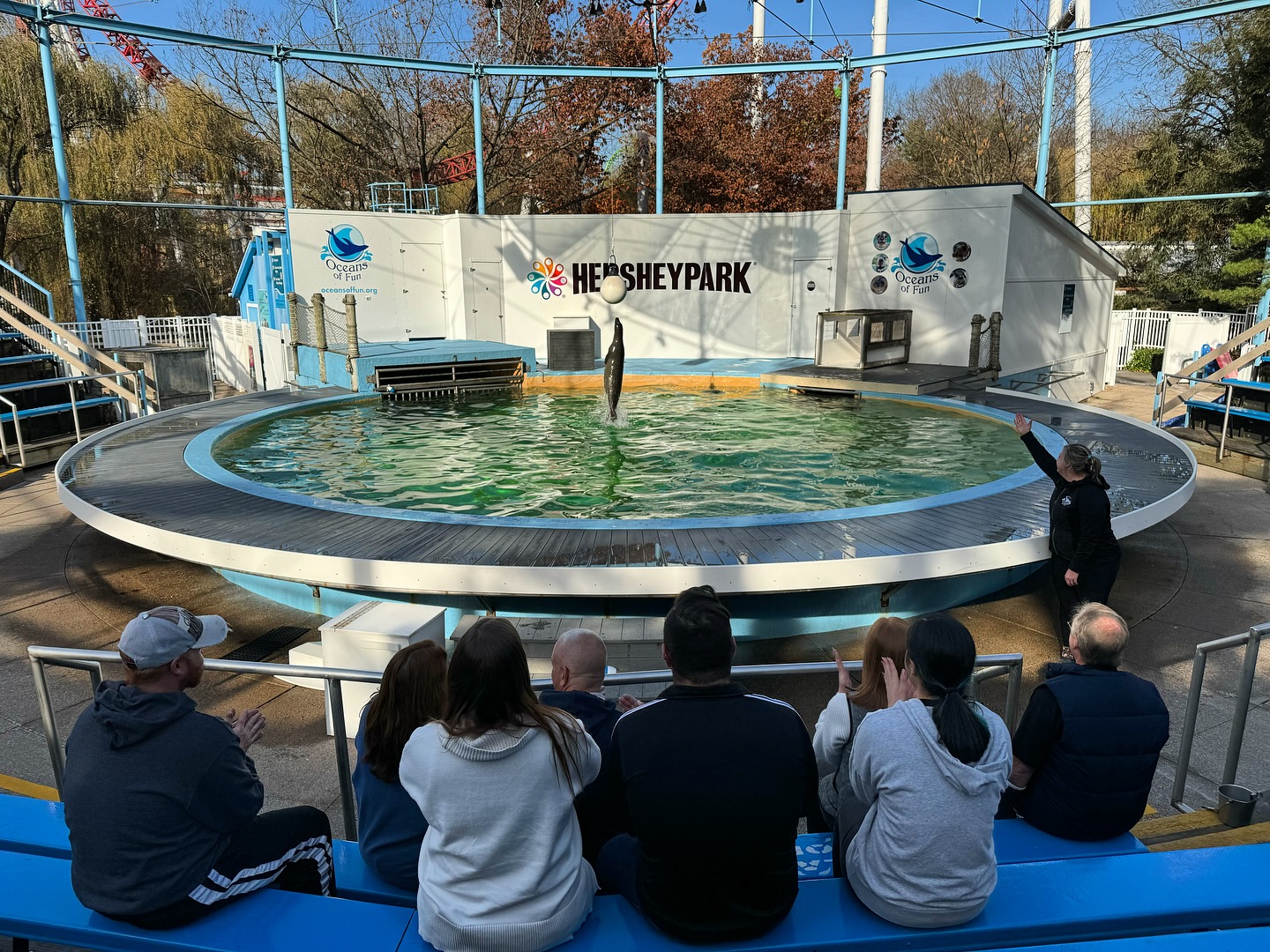
Scooter turns 30! Help us celebrate Scooter’s 30th Birthday by donating to his care to receive an exclusive, limited run sticker or keychain! These items can be picked up at the Hersheypark Aquatheatre around showtimes May 15th - 17th. At this time, only stickers are available for shipping. Click Here to Contribute
News Item
Join Ocean Connections for our 2nd Annual Sea Lion Shuffle Stay Away 5K, with all proceeds benefitting sea lion care and conservation. Run, walk, hike, swim, bike, horseback ride, or rollerskate a 5K by yourself from anywhere to participate in this fun event! Register at https://www.oceanconnections.org/events, then run, walk, hike, swim, bike, horseback ride, or rollerskate a 5K ! Your registration fee benefits sea lions AND includes a Sea Lion Shuffle 5K commemorative t-shirt print with the winning design from our T-Shirt Design Contest! What's a Stay Away 5K? Watch this video from Ocean Connections president, Shelley Ballmann, showing you exactly how to do it: https://fb.watch/4kDKjDi5zq/ This is a remote 5K - you do not need to be local to participate! Run or walk wherever you live! THANK YOU FOR YOUR SUPPORT! With our facility continuing to feel the impact of COVID-19, your donation through this event will help us make up for revenues that we would have otherwise generated from educational programming and fundraisers. Gifts through this virtual race will support our care and conservation of sea lions.
News Item
Join Ocean Connections for our 2nd Annual Sea Lion Shuffle Stay Away 5K, with all proceeds benefitting sea lion care and conservation. Run, walk, hike, swim, bike, horseback ride, or rollerskate a 5K by yourself from anywhere to participate in this fun event! Register at https://www.oceanconnections.org/events, then run, walk, hike, swim, bike, horseback ride, or rollerskate a 5K ! Your registration fee contributes to the exceptional care of our seals and sea lions by assisting Ocean Connections in acquiring updated medical equipment. You'll also receive a Sea Lion Shuffle 5K commemorative t-shirt print with the winning design from our T-Shirt Design Contest! What's a Stay Away 5K? Watch this video from Ocean Connections president, Shelley Ballmann, showing you exactly how to do it: https://fb.watch/4kDKjDi5zq/ This is a remote 5K - you do not need to be local to participate! Run or walk wherever you live! THANK YOU FOR YOUR SUPPORT! With our facility continuing to feel the impact of COVID-19, your donation through this event will help us make up for revenues that we would have otherwise generated from educational programming and fundraisers. Gifts through this virtual race will support our care and conservation of sea lions.
Pages
Thanks for participating in the Sea Lion Shuffle Stay Away 5K! Please fill out the form below to claim your free t-shirt. You must fill out a separate form for each registered 5K participant. T-shirts can only be mailed to addresses within the USA.
Pages
Build a running team… and win! Teams that run together have fun together! Build a running team and help support sea lion care and conservation! One lucky team member will win a private interactive program for up to 10 participants to meet our seals and sea lions (value $1,000; ages 10+). To enter, here is what you need to do: Since this is a Stay Away 5K, your team can consist of anyone in the world! Family, friends, running team, co-workers, book club, etc. Come up with a creative team name Go to www.oceansoffun.org/store_item_detail/260 to enter. Be sure you and all of your team members enter your team name when registering. To qualify, teams must have a minimum of seven registrations. More registrants = more chances to win! Each registrant for your team = one entry for the drawing. For example, if your team has eight members register, then that team will have eight chances to win. If your team has 20 members register, then the team will have 20 chances to win! NOTE: The Ocean Connections tour has a maximum of 10 participants – but your out-of-town team members can increase your chances of winning while also helping to raise money for sea lion care and conservation! The winner will be announced on Tuesday June 1st, 2021. Winners can redeem their private tour at a future date. Questions? If you have questions about your donation, please reach out to Shelley Ballmann at shelley@oceanconnections.org. All other questions, including those related to the t-shirt design contest, should be directed to brittany@oceanconnections.org. << GO BACK TO EVENTS
Pages
Criteria for Submission: Your design should include the name of our event: Ocean Connections Sea Lion Shuffle. It can feature a single species of sea lion, or multiple species — you choose! There is no limit to the number of entries per entrant during the entry period. Entrants must be 18 years of age or older or, if younger than 18, have the permission of a parent or guardian to enter the contest. Ocean Connections staff are not eligible to enter. Submissions must be your original artwork only. Designs should be against a white or transparent background and can contain up to 4 colors. The color of the final t-shirt will be determined based on the winning design. Dimensions of the design should be at least 10” x 10”. If your submission needs to be reproduced to ensure the highest quality of printing, we will do our best to recreate the most accurate design. How to Submit Your Design: T-shirt designs must be received by 11:59PM CT on Friday March 26th, 2021. Design entries should be sent via email to brittany@oceanconnections.org — please use “T-Shirt Design Contest” as your subject line. Designs should be in one of the following formats: JPEG, PSD, or PDF. Please send the highest-resolution files you can. Once submitted, all designs become the property of Ocean Connections, and the entrant agrees to grant exclusive use to the Ocean Connections. Ocean Connections has exclusive rights to reproduce and use any and all entries into the t-shirt contest. Entries become the property of Ocean Connections and none will be returned or acknowledged except as provided herein. The contest winner will receive a gift package or a private Aquatic Adventure. If you win, you will be notified via email, and it will be posted online on the Ocean Connections website, as well as its social media accounts. Any questions should be sent to Brittany Waryjas: brittany@oceanconnections.org Deadlines March 15, 2021 – contest begins March 26, 2021 – final day to submit art March 27, 2021 – selection of top three submissions; online voting begins March 30, 2021 – voting ends March 31, 2021 – winner revealed << GO BACK TO EVENTS
Pages
General Information Scientific Name: Zalophus californanus Order: Pinnipedia Life Span: Zoological environment 25 - 35 years, wild 10 - 15 years Diet: Males consume 30 - 45 pounds of fish daily while females typically consume 15-25 pounds. Diets consist of a variety of fish and invertebrates including capelin, squid, herring, mackerel, smelt and sardines. Size: Males weigh up to 800 pounds at full maturity and average 8-9 feet in length. Females weigh considerably less at approximately 250 pounds, averaging 6 feet in length. Fun Facts Sea lions can hold their breath 15 - 20 minutes. Sea lions can reach speeds up to 22 mph. A female sea lion's gestation period is 12 months, including a 3 month delayed implantation. During this time the fertilized egg is free-floating and not attached to the uterine wall. Pups nurse for 6 - 12 months. California sea lions can be found as far north as British Columbia, along the coast of California and as far south as Mexico. Sea lions are capable of diving to depths of up to 1100 feet. In the winged-footed family also known as pinnipeds, there are true seals and eared seals. The eared seals are what we know as sea lions and fur seals. These pinnipeds have a few characteristics that make them different from the true seals. Eared seals have external ears, large front flippers which are used to propel their bodies through the water reaching speeds between 20 and 25 miles per hour, and they possess a rotating hip bone allowing them to walk on land using all four flippers. Today there are 17 known species of sea lions and fur seals. The most common type of sea lion seen in zoos and aquariums is the California sea lion. Within the species of California Sea lion there are 3 sub-species. They are Z. c. californianus, Z. c. wollebaeki, and Z. c. japonicus. The species of fur seals differ from sea lions in that they have longer flippers and a thicker coat of fur. Distribution: California sea lions are naturally found all along the coast of California as far north as British Columbia and as far south down into Mexico. Habitat: California sea lions spend time both on land and in the ocean waves. While swimming they forage for their food, play and socialize. They breed mainly on offshore islands, ranging from southern California’s Channel Islands south into Mexico. There is also a distinct population of California sea lions at the Galapagos Islands. Behavior: California sea lions are playful, noisy, social animals. They often rest closely packed together at favored “haul-out” sites on land or float together on the ocean’s surface in “rafts”. Sea lion pups are very playful and can often be seen surfing the waves, leaping and porpoising through the water. Family Life: California sea lion pups are typically born during the warm summer months. Females give birth to a single pup following a 12- month gestation period typically in June or July. Females give birth on land as pups do not know how to swim at birth. Gestation includes a period of delayed implantation, when the fertilized egg stops growing and remains dormant for a period of 2 1/2 - 3 months. Delayed implantation allows pups to be born when environmental conditions are optimal for their survival. Pups typically weigh about 15 pounds at birth and nurse for 6-9 months. Until the pups know how to swim, mothers leave them on the shore while they return to the sea to feed. Pups have very individual calls which allow their mothers to locate them amongst numerous other pups once she returns to the shore. Sea lion milk is high in fat content allowing pups to gain weight quickly. Pups naturally learn to swim within the first few weeks of life by playing with other juveniles along the beach. Adult females usually mate and give birth every year. Sea lions may live 25-35 years in a zoological environment. Conservation Status: All marine mammals including sea lions and seals are protected under the ked congress to allow federal authorities to relocate California sea lions that are preying on endangered fiMarine Mammal Protection Act (MMPA), which was passed in 1972 by the United States to protect these animals from hunting and harassment. A few years prior to the passing of the MMPA, Mexico and Canada also banned the hunting of these animals. Although this act is in place, there are many dangers at sea and on land that marine mammals face. Pollutants, commercial fishing, and drift nets are just a few reasons why it is difficult for these animals to survive. The National Marine Fisheries Service has assh species, or a threat to safety, property and commercial fishing. Many species are listed as endangered and some are extinct. The Japanese sea lion is one species that has not been reported on in more than 30 years and is listed as extinct. Humans are one of the largest threats to these animals and their environments. It is our responsibility to protect and preserve these animals and the environments in which they live. One of the easiest ways that we can help is to recycle and dispose of trash and hazardous material properly. In doing this we will help reduce the amount of debris that flows into the oceans and washes up onto shorelines to create a safe and healthy environment for these animals to survive for future generations. The California sea lion population is stable, which means that it is not currently at risk for extinction. The world population is estimated at 200,000 animals. For further information Seal Conservation Society: www.pinnipeds.org ADF&G Wildlife Notebook Series: www.adfg.state.ak.us/pubs/notebook/notehome.php GeoZoo: www.geozoo.org Riedman, Marianne. The Pinnipeds: Seals, Sea Lions, and Walruses. Berkley: University of California Press, 1990.
Pages
General Information Scientific Name: Phoca vitulina Order: Pinnepedia Average Life Span: Zoological environment up to 25-35 years Diet: Consists of an assortment of fishes and invertebrates including herring, cod, flounder, sculpin, shrimp, octopus, capelin and squid. Size: Males weigh up to 350 pounds and average 5-7 feet in length. Females weigh up to 200 pounds and average 4-6 feet in length. Fun Facts Seal pups are born in spring and summer, and enter the water almost immediately. Seals are capable of diving to depths of up to 1700 feet. Seals can swim underwater for a duration of 40 minutes. Sexual maturity in seals happens at age 3-6 for females and 3-7 for males. In the scientific order Pinnipedia, there are true seals and eared seals. Harbor seals, also known as common seals, are true seals that possess certain characteristics making them different than eared seals. True seals possess internal ears, propel themselves through the water with their hind flippers in a side to side or sculling motion, and use their stomach muscles to bounce along the land. Harbor seals have a rounded body and their flippers are short and webbed. Their fore flippers have noticeable claws that harbor seals use for scratching, grooming, and defense. Harbor seals typically have beautiful coats of gray or brown fur with individual dark and light spots. Males are slightly larger than females. There are five subspecies of harbor seals: P.v. richardsi, P.v. vitulina, P.v. concolor, P.v. mellonae, and P.v. stefnegeri Distribution: Harbor seals can be found along both the Atlantic and Pacific coasts. In the east they range from from Canada and Greenland through New York. In the Pacific ocean they range from Alaska down to Baja, Mexico. Habitat: Harbor seals prefer shallow areas of estuaries, rivers and places where sandbars and beaches are uncovered at low tide. They prefer to haul out on rocky cliffs as well as sandy beaches to rest and raise their pups. When they are not on land, these seals are commonly seen in the Arctic, subarctic and temperate coastal waters, estuaries and rivers. Predators: Harbor seals are hunted by large sharks, orcas and polar bears. Like most animals living in the wild today, human destruction of their environment creates the largest danger to them. Family Life: Harbor seals do not form pair bonds. Male seals breed with many females. Pregnant seals give birth to a single pup following an 11- month gestation period typically in March or April. Females give birth on land, ice, or in the water near shore. Gestation includes a period of delayed implantation, when the fertilized egg stops growing and remains dormant for a period of 1 1/2 - 3 months. Delayed implantation allows pups to be born when environmental conditions are optimal for their survival. Pups nurse for about four to six weeks. Harbor seal milk is high in fat content allowing pups to double in weight by the time they are weaned. Females recognize their pups by vocalizations and by smell. After the pup is weaned, the female shows no interest in the pup. Pups typically weigh up to 30 pounds at birth and naturally learn to swim within the first moments of life. Pups nurse from their mothers for about four weeks, after which they are weaned. Adult females usually mate and give birth every year. Seals may live 25-30 years in a zoological environment. Earless Seals: Harbor seals are called earless seals because they lack external ear flaps. Their ears are internal providing them with excellent hearing. Diet: Harbor seals have 34 - 36 teeth. Their teeth are pointed and sharp, adapted for grasping and tearing, not chewing, their food. Harbor seals are opportunistic feeders and eat a variety of fish and invertebrates. Their diet varies seasonally and regionally depending on local prey availability. They generally feed close to shore and in shallow waters. Behavior: Harbor seals spend about half of their time on land and the other half in the water. Harbor seals can swim up to 12 - 15 miles per hour, but they generally cruise at slower speeds. They are known to dive up to 1,500 feet and are capable of holding their breath for up to 40 minutes per dive. Conservation Status: Harbor seals and all marine mammals are protected under the Marine Mammal Protection Act (MMPA) passed in 1972. This act makes it illegal to hunt or harass any marine mammal in U.S. waters. According to the MMPA, all seals and sea lions in U.S. waters are under the jurisdiction of the National Marine Fisheries Service. Although these mammals are protected by law, they are still under threat due to human impact. Marine debris is extremely dangerous and often deadly. Seals and sea lions live both on land and water, so they encounter both material dumped at sea as well as debris such as fishing line that washes up on shore. By recycling, we can all help to save and preserve these animals and our environment. The Atlantic harbor seal population is stable, which means that it is not currently at risk for extinction. The harbor seal world population is estimated at 400,000-500,000 animals. For additional information Seal Conservation Society: www.pinnipeds.org Riedman, Marianne. The Pinnipeds: Seals, Sea Lions, and Walruses. Berkley: University of California Press, 1990.
News Item
Oceans of Fun has been sending a few of our flippered friends to our sister facility located inside of HersheyPark PA for the last seven summers! While our two sea lion stars at Hershey, Diego and Colby, ventured back to Wisconsin for the winter, this year we are thrilled to be keeping our two harbor seals, Bumper and Mango, year round in Hershey, along with their dedicated trainers, for the first time ever. Mango joined our family last spring on a breeding loan from the Chicago Zoological Society in the hopes that her and Bumper may one day have a pup. Facilities partake in breeding loans as a way to help spread genetic diversity among zoological populations. Keeping Mango and Bumper year round in one location allows time for them to bond as well as ensure stability and increase the possibility of successful breeding. Mango and Bumper have been doing great all winter and there is no better way to spend their first winter in Hershey than to experience a snow storm of up to 30 inches of snow! Atlantic Harbor Seals are no strangers to snow, since in the wild they can be found as far north as Greenland. Seals’ diets increase in the winter in order to regulate their body temperature and aid them in packing on blubber, which acts as insulations that can be 4-6 inches thick! Mango and Bumper welcomed the snowflakes and are often found with snow among their whiskers. Between all the snow and training sessions, Mango and Bumper are thriving at HersheyPark! Stop by Hershey Park for Springtime in the Park to get a glimpse of our seals in action! Check out http://www.hersheypark.com/ for more information regarding park hours.
News Item
Please join us for an Adopt-a-Beach Cleanup on Thursday September from 5:30pm to 7:00pm at South Shore Park. Trash bags are provided, but please consider bringing a bucket or plastic bag from home to reduce the event's environmental footprint. Please bring gloves if you have them.
News Item
Ocean Connections would like to thank you for 33 wonderful years of memories full of our flippered friends. Share yours and it could be featured on our social media accounts! Send in your favorite story and photo(s) by visiting: https://form.jotform.com/233306790125048
Pages
Shipping Policy: Orders for items that are in stock are usually shipped within 24 to 48 hours, excluding weekends. Barring exceptions, these orders ship out Monday through Friday. Currently Ocean Connections only ships to addresses within the United States. We offer free standard shipping. If expedited shipping service is needed, please call us to place your order at 414-453-5527. Return Policy: If you are not 100% satisfied with your purchase, feel free to return the item along with your receipt. Items returned within 30 days will receive a full refund. We cannot accept returns on items past 30 days of purchase. If your purchase was charged to a credit card, a credit will be issued to your account. If you paid by check, a refund check will be issued within 10 days from receipt of the returned item. If your purchase was damaged upon arrival, please contact us for return shipping instructions at 414-453-5527.
Pages
Ocean Connections is excited to be offering two brand new opportunities to spread some love, fun, and positivity. You can now invite one of our seals and sea lions to share a special message for you or to join in your virtual hangouts! The donations for these programs helps our 501(c)3 non-profit organization with the daily feeding and care of our animal ambassadors. Check them out below! Personalized Shout Out Have a message you would like to send a friend or a loved one? Say it with a seal or sea lion! With every donation of $40.00, you'll receive a fully personalized shout out for you or a friend. Whether it's wishing someone a happy birthday, sending some love on an anniversary, or simply saying hello to someone you miss, our greetings are completely customizable and include a special flippered guest. Learn more or get yours today by clicking here. Virtual Hangout Get the seal of approval from your co-workers when you invite one of our animal ambassadors to your next Zoom or Google Hangout meeting. Our seals and sea lions are happy to join your next meeting to start or end your discussions on the right flipper. From Team Building to celebrations to incentives, your donation of $250.00 allows our animal ambassadors to add an element of fun to your virtual gathering. Learn more or make a reservation by clicking here.
News Item
Ocean Connections is excited to be offering two brand new opportunities to spread some love, fun, and positivity. You can now invite one of our seals and sea lions to share a special message for you. No matter what you may be celebrating or if you just want to make someone smile, you can do so with the help of our animal ambassadors during a fully customizable shout out! Hosting a Virtual Meeting on Zoom or Google Hangout? Invite one of our seals or sea lions to make it fun! The donations for these programs helps us with the daily feeding and care of our animal ambassadors. Learn more or reserve them today by clicking here.
